
Last updated November 15, 2026
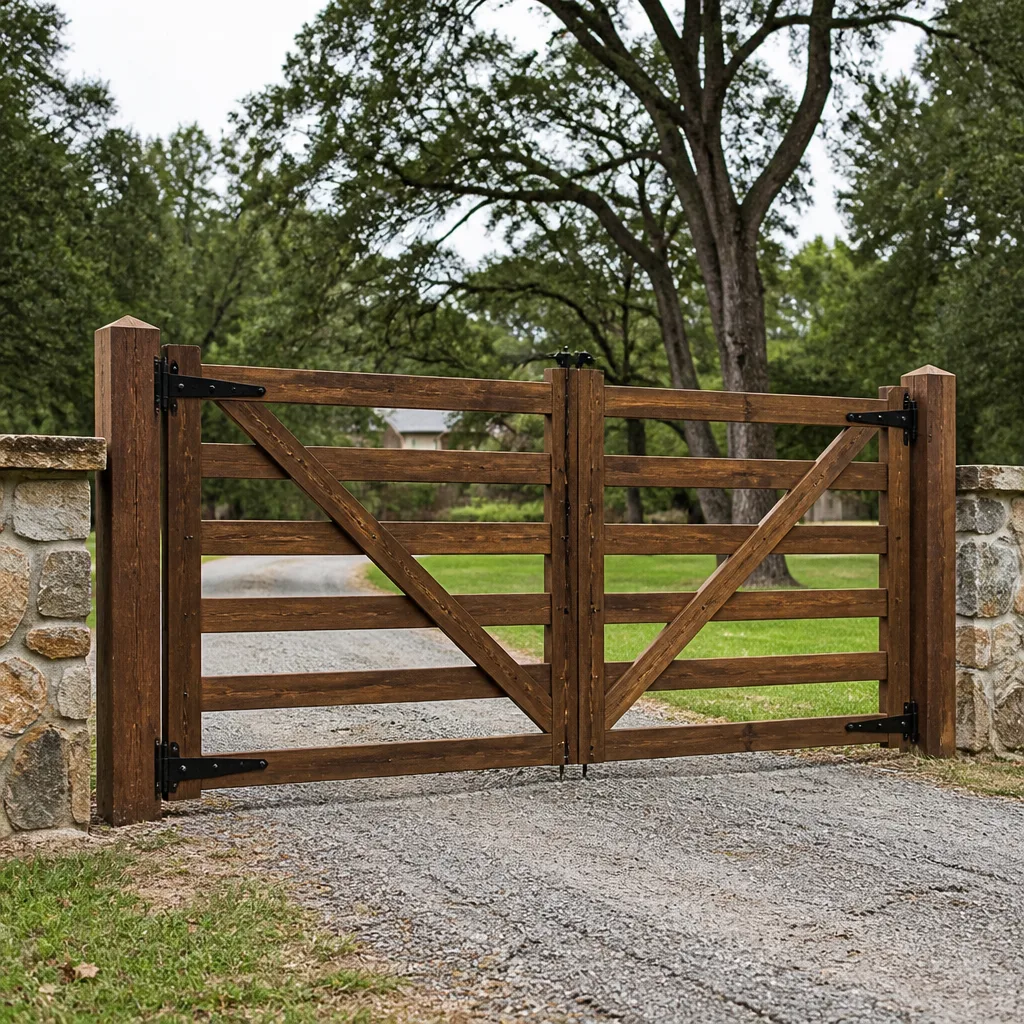 Farm & ranch
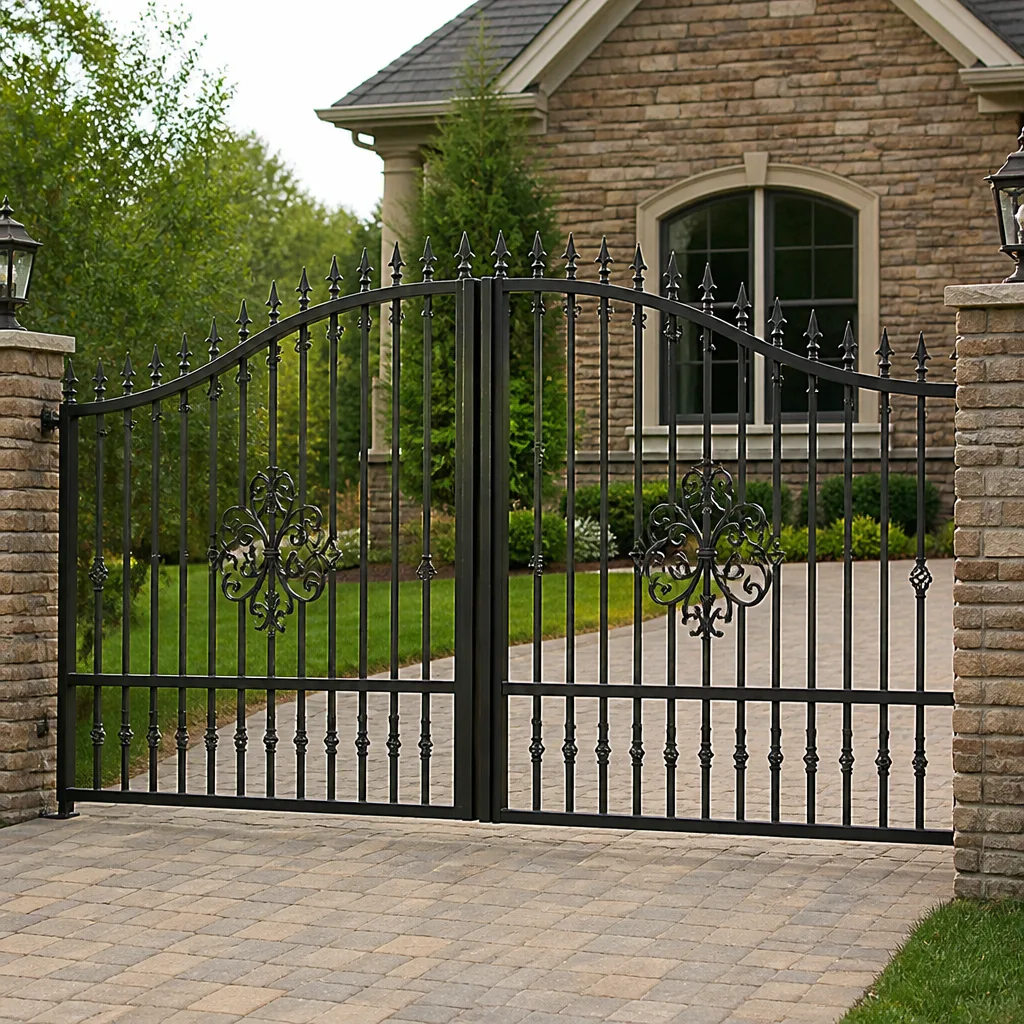 Wrought iron
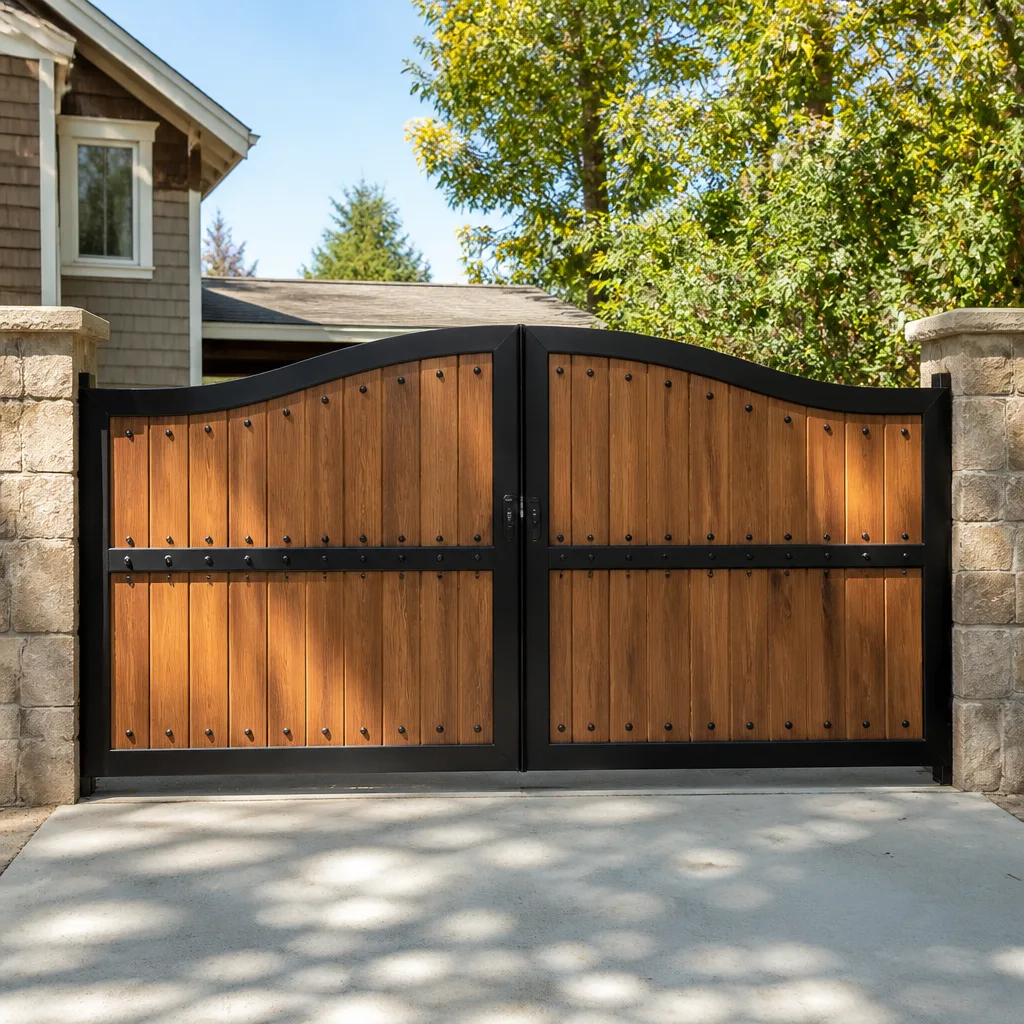 Wood & steel frame
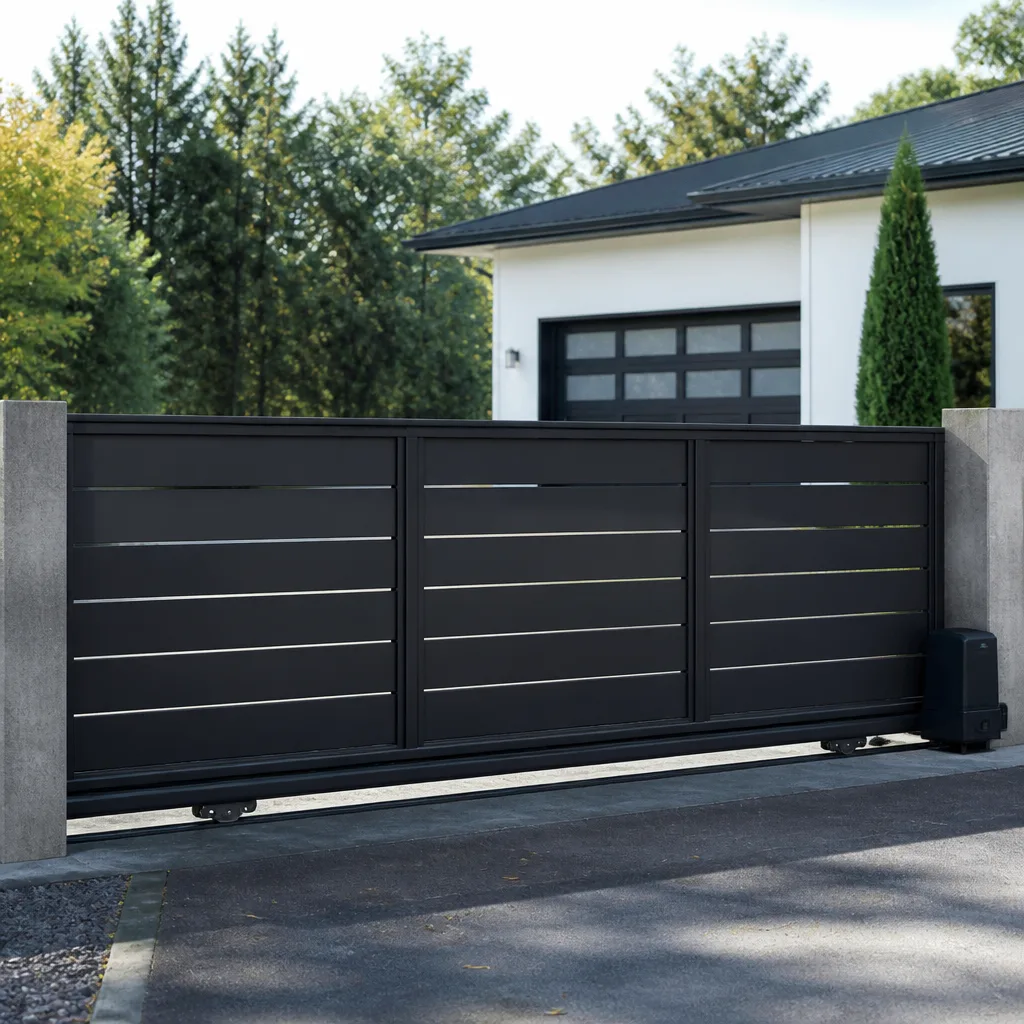 Sliding driveway gates
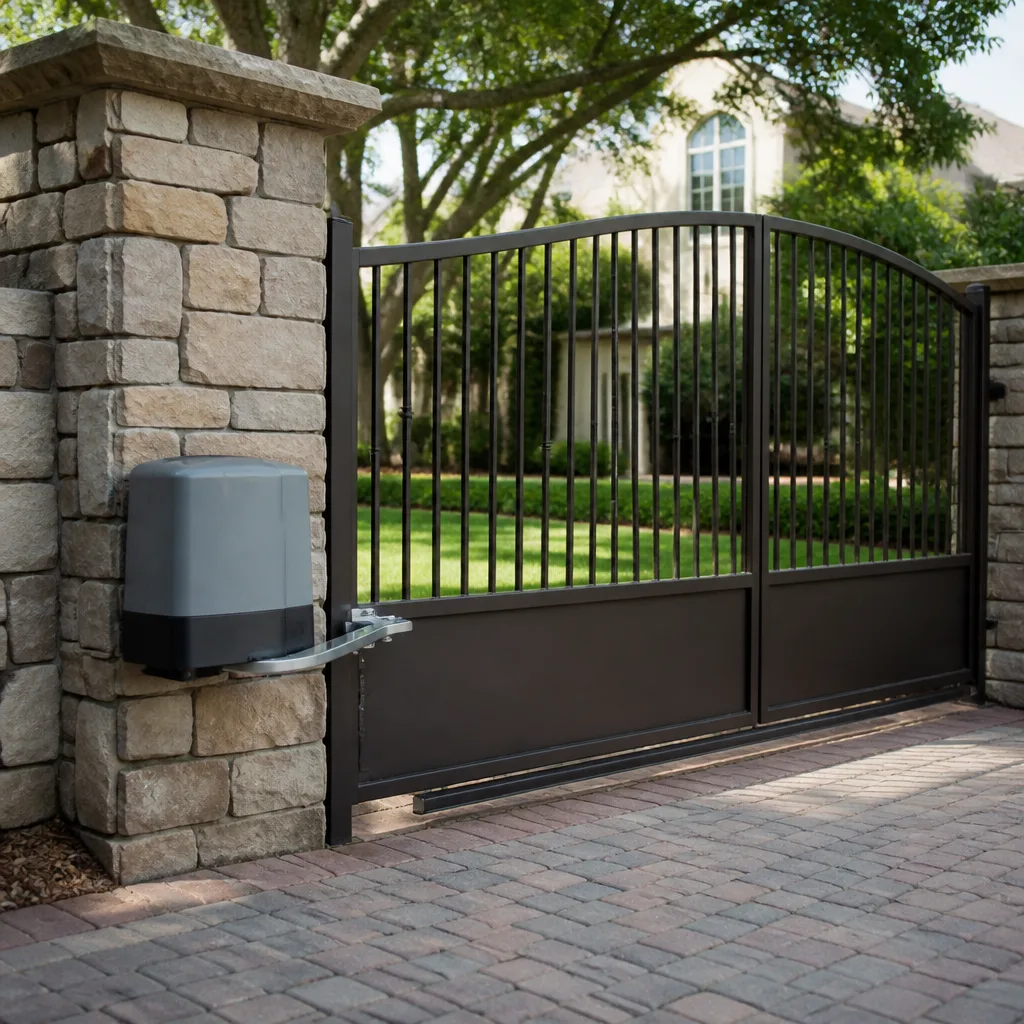 LiftMaster operators
Free on-site gate assessment - hinges, posts, and your LiftMaster or Nice gate operator checked before anything is quoted
The assessment is free and the quote is the invoice.
Get your free estimateSeasonal Gate Repair Care for Highlands Ranch: Year-Round Homeowner’s Guide
Here’s something most homeowners get backwards: a gate that quits in January isn’t usually failing because of January. More gates here fail in March than in the coldest month of the year, because the freeze-thaw cycles of a Colorado winter do slow, cumulative damage that only shows up structurally once temperatures steady in early spring. The gate that stuck in March was already compromised in December. You just couldn’t feel it yet. This guide breaks the year into four real seasons of gate stress, gives you a month-by-month calendar of 10-minute checks, and explains why the two transition seasons, fall and spring, are where the smart money goes.
Quick Answer
Seasonal gate care in Highlands Ranch means front-loading your effort into two windows: fall (before the first hard freeze) and early spring (before March heaves your posts). Fall prep is about lubrication rated for cold, battery load testing, and clearing drainage away from posts. Spring prep is about catching post heave and swing misalignment early. Summer and winter are for light checks and operator setting adjustments, not big fixes.
Styles & brands we work with
- Wrought iron
- Wood & steel frame
- Farm & ranch
- Sliding driveway gates
- LiftMaster operators
Table of Contents
- Fall: The Prep That Actually Matters
- Winter: What Cold Does to an Automatic Operator
- Early Spring: The Highest-Risk Window
- Summer: UV, Heat, and Dark Iron
- The Month-by-Month Check Calendar
- Adjusting Operator Speed and Sensitivity for Cold
- Common Mistakes to Avoid
- When to Call a Professional
- Frequently Asked Questions
Fall in Highlands Ranch: The Prep That Actually Matters
Fall is the season most homeowners treat as a box to tick (“get the gate ready for winter”), but the checklist most people run is the wrong one. Raking leaves and eyeballing the hinges doesn’t address what actually fails when the ground freezes. Three things do the real work, and each takes about ten minutes.
1. Lubricate hinges with a cold-rated grease, not a thin household oil. A light oil that feels fine at 60°F thickens into a paste at 15°F, and your swing gate becomes hard to push overnight. A lithium or silicone-based grease rated for low temperatures keeps its film when the mercury drops and doesn’t turn gummy. This is the single most common fall oversight we correct.
2. Load-test the operator battery before the cold arrives. A battery that reads fine on a warm day can sag under the higher current draw that cold puts on an automatic gate system. If you can, run the gate through several full open-close cycles on battery power alone and watch for slowdown or a stall. Battery weakness is one of the top reasons automatic gates “mysteriously” stop working in the middle of winter, and it’s entirely preventable.
3. Fix drainage around your posts. Colorado’s freeze-thaw does its worst work on water. If a downspout, slope, or seasonal runoff directs water to the base of a gate post, that water will freeze, expand, and lift. Clear it, redirect it, add gravel if needed. A post that stays dry all winter is a post that won’t heave in spring.
When the weather turns, get ahead of the rush. We’re glad to run a real fall prep and operator check for you before the ground freezes, so a fixable weakness doesn’t become a March emergency. Call gate repair at (866) 509-8380 for a free estimate. We answer 24/7. Fast dispatch from 7am to 7pm, Sunday through Friday.
Winter: What Cold Does to an Automatic Operator
An automatic gate operator is a machine with a motor, a control board, a battery or power supply, and a set of safety sensors. All four react to cold differently, and understanding that lets you separate “normal cold behavior” from “something’s wrong.”
- Battery and power draw. A cold battery delivers less current just when the motor needs more to move a stiff, frost-bound gate. If your gate slows at the end of a cycle or double-cycles to latch, the battery is the first suspect.
- Motor and gearbox torque. Grease and mechanical tolerances tighten in cold. Most quality operators are rated for cold operation, but a system that’s already marginal will show its weakness clearly in winter.
- Safety sensors and photo-eyes. Cold can fog or frost the lenses that tell your operator the path is clear. A frosted safety eye can cause the gate to reverse mid-travel or refuse to close. Wiping the lenses is a genuine five-second winter check.
- Control board condensation. Temperature swings pull moisture into enclosures. A board that works fine warm can act erratically when damp and cold. This is where knowing your brand matters: a FAAC or BFT board behaves differently from a consumer-grade unit, and setting it up “to spec” avoids problems.
Winter is also when we get the most calls on electric systems that quit mid-cycle. If yours does, don’t force it manually. A gate bound up with frost or a failing operator pushed hard by hand can strip gears or bend linkage. Give us a call instead. Call (866) 509-8380. We answer 24/7. Fast dispatch from 7am to 7pm, Sunday through Friday.
Early Spring: The Highest-Risk Window in Highlands Ranch
March and April are the months homeowners should pay closest attention, because the ground is moving underneath their gate and the gate is telling them so in small ways first. The culprit is post heave. As the soil thaws, expands, and settles unevenly, a gate post that was plumb in November can be a fraction of an inch off by March. On a single gate, that’s barely visible. On a double swing gate, a fraction of an inch at the post translates to visible misalignment at the meeting point, and that’s when the latch starts dragging or the operator starts complaining.
Here are the early indicators worth watching for, all of which show up before an outright failure:
- The latch catches or drags. If you have to lift or nudge the gate to latch it, the post or the gate has moved. Don’t muscle past it, because that forces the hardware.
- A visible gap or overlap at the center of a double gate. Compare the meeting point now to how it looked in fall. A widening gap on one side, or the leaves overlapping, signals heave.
- The operator reverses or struggles on the last portion of travel. A gate that’s rail-bound or hinge-bound from a shifted post puts out more resistance, and a quality operator (say a Viking or Linear system) will “feel” it and react.
- A post that looks or feels loose at the base. Any wobble at the post is a real symptom, not cosmetic.
If you catch heave here in early spring, it’s often a matter of re-aligning, re-hanging, or adjusting hardware to accommodate the new geometry, or resetting the post. Let it go another month and a shifted post can start wearing gate hardware and stressing the operator motor. That’s why spring is the transition season worth putting real effort into: it’s the cheapest moment to fix the cheapest problems. If your gate has shifted this spring, an on-site estimate is free. Call (866) 509-8380 for a gate repair assessment. We answer 24/7. Fast dispatch from 7am to 7pm, Sunday through Friday.
Summer: UV, Heat, and Dark Iron in a High-Sun Climate
Summer in Highlands Ranch stresses gate systems in ways people tend to dismiss, because the gate “still works.” But metal expands in heat, and the consequences are cumulative. A dark powder-coated iron gate in particular absorbs a tremendous amount of heat, and that matters.
- Thermal expansion and latching. Heat expansion can change the gate’s fit against its post or its center latch. Sometimes a gate that “sticks” in high summer isn’t broken; it’s a fraction larger than the gap it has to close into. The fix is often adjustment, not replacement.
- Powder-coat and UV wear. High-sun exposure fades and dulls coatings, and once the protective finish goes, moisture and oxidation creep into the metal underneath. A light re-coat or touch-up each season preserves both the look and the structure.
- Operator heat and duty cycle. Motors run hotter in direct sun. A commercial-grade operator (FAAC, BFT, DoorKing) is built for high-cycle duty, but any motor pushed hard in high heat can go into thermal shutdown. High-sun installations benefit from checking that the operator’s enclosure gets some shade or ventilation.
- Dust and grit in tracks and hinges. Dry summer conditions push grit into slide-gate tracks and gate hinges. Cleaning and re-lubricating moving parts keeps the mechanism smooth and saves wear.
Summer is also the right time to check that your automatic gate’s safety edges and sensors are clean and unobstructed. Dry dust can blind a sensor lens, and that’s a genuine safety concern on a gate that closes on power. If you’re unsure whether your safety settings are correct, having a specialist look is worth the call. Call (866) 509-8380. We answer 24/7. Fast dispatch from 7am to 7pm, Sunday through Friday.
The Month-by-Month Check Calendar
Here’s the practical heart of this guide: a schedule of 10-minute checks you can actually do, keyed to the seasons that matter in Highlands Ranch. Rather than a vague seasonal to-do list, assign each task a month.
- Late September: Lubricate all hinges with a cold-rated grease. Wipe the safety eye lenses. Clear leaves and debris from tracks and near the posts.
- October: Load-test the operator battery with full open/close cycles. Fix any drainage directing water to post bases. Touch up any powder-coat damage before winter.
- November: Confirm the operator’s closing speed and sensitivity settings suit cold weather (more below). Listen for slowdowns or double-cycles in colder mornings.
- First thaw or early March: Walk the gate line. Check the latch, the center gap on double gates, and the post bases. This is the month to catch heave early.
- April: If you saw any spring indicators, get them assessed. Re-check post plumb and hardware tension. Clear winter grit from tracks and hinges and re-lubricate.
- June: Inspect powder-coat and paint on sun-exposed faces. Clean and re-lubricate moving parts. Confirm sensor lenses are clear and unobstructed.
- Mid-July: If you run the gate heavily (a long driveway, high-traffic access point), a mid-summer check of the operator’s heat exposure is worth ten minutes.
- August: The quiet month. Use the time to note anything that’s nudged out of alignment over the summer so it’s on your fall list.
That’s the whole calendar. None of it is heavy lifting, but done consistently it catches small issues before they’re big ones. And it beats chasing a broken gate in the middle of a cold snap. If you’d rather have a technician run this annual schedule for you, Stratford Gate Repair is here to help. Call (866) 509-8380 for a free estimate. We answer 24/7. Fast dispatch from 7am to 7pm, Sunday through Friday.
Adjusting Operator Speed and Sensitivity for Cold
Below about 20°F, an automatic gate operator behaves differently than it does in mild weather, and the smart move is to set it up for that reality before it bites you. This is one of those areas where a specialist’s system knowledge matters: a BFT or Viking control board lets you tune how the gate responds, and a general handyman won’t know where those settings live.
Closing speed. Cold-thickened grease and frozen ground friction make the gate slower to close. If the operator is set to expect a certain speed, it can over-torque trying to hit it, or time out and reverse. Many quality operators have a low-temperature or slow-close mode; set it. A slightly slower, gentler close in cold is both safer and easier on the mechanism.
Sensitivity and obstruction detection. Most operators watch for resistance (force) or rely on safety edges and sensors to detect obstruction. In cold, the gate’s normal resistance rises, so a setting tuned for summer can misread a frost-bound gate as an obstruction and reverse repeatedly. Conversely, if you crank up sensitivity to force it through, you can override a genuine safety response. The right approach is to have the force and sensor settings properly tuned for cold operation, so the gate closes smoothly in low temperatures without ever skimping on the obstruction response that keeps people safe.
A word of caution here that we won’t skip: the wiring and power that feed an automatic gate operator, and the safety edges that detect obstruction, are genuinely dangerous if handled incorrectly. Don’t open the operator’s control enclosure or poke at live wiring yourself. Setting cold-weather behavior is a job for someone who knows your specific brand, its control board, and its safety requirements. If your gate is misbehaving as temperatures drop, that’s a sign to call.
For expert adjustment on the brand you already have, get in touch. Call (866) 509-8380 for a free estimate. We answer 24/7. Fast dispatch from 7am to 7pm, Sunday through Friday.
See the difference
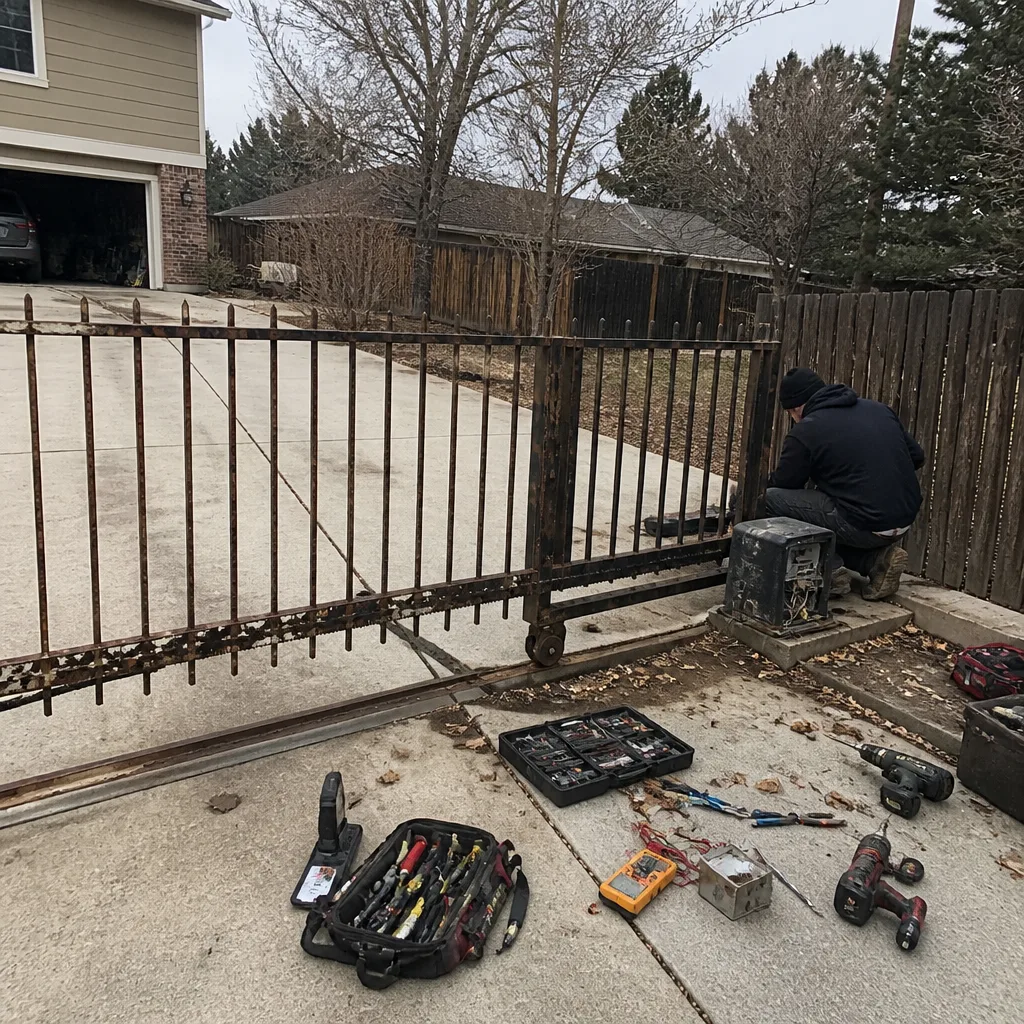 Before
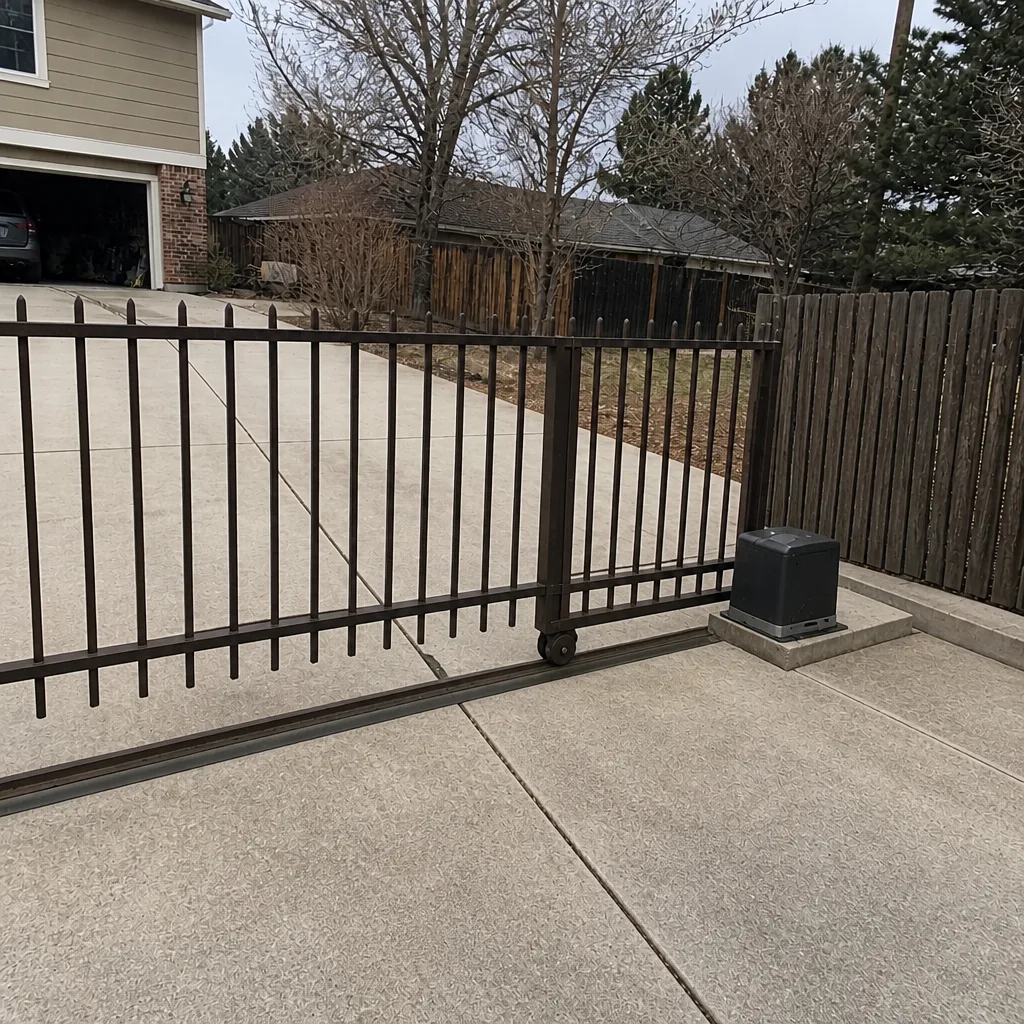 After
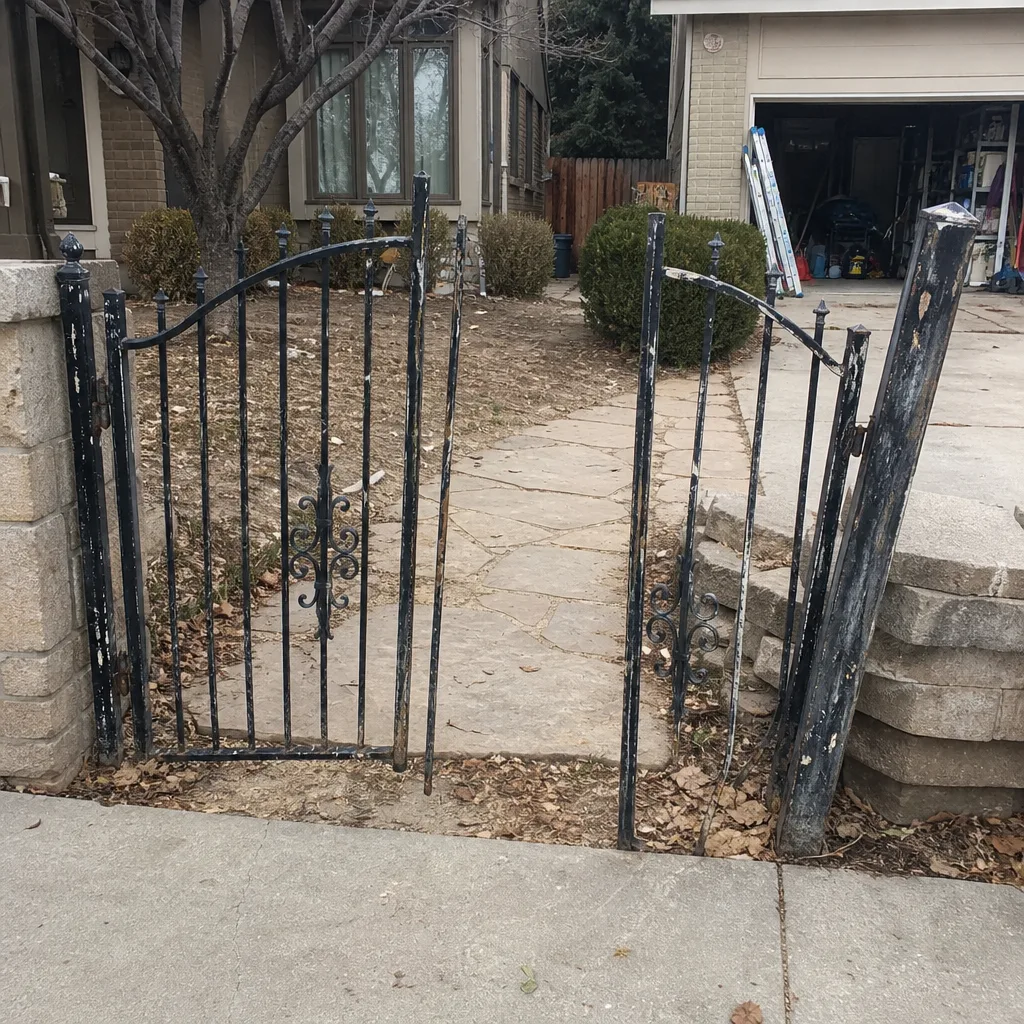 Before
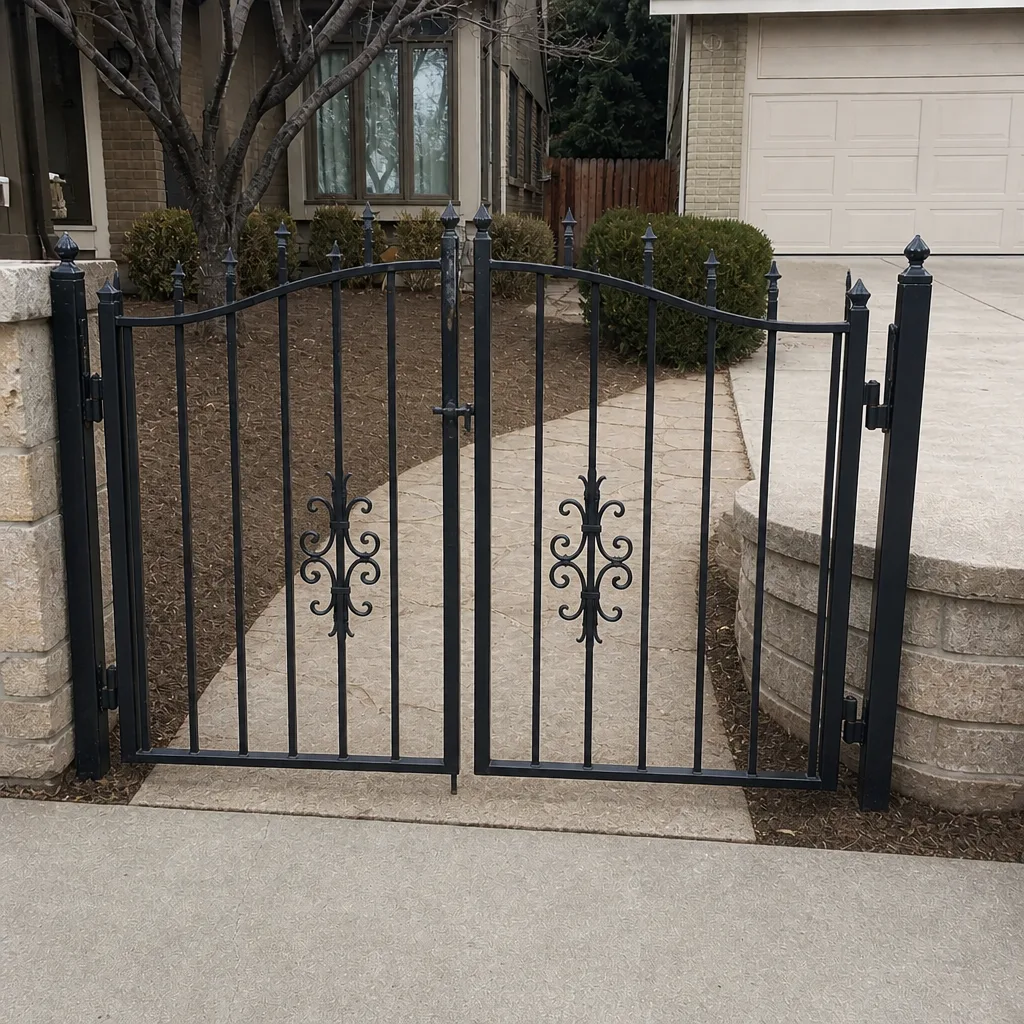 After
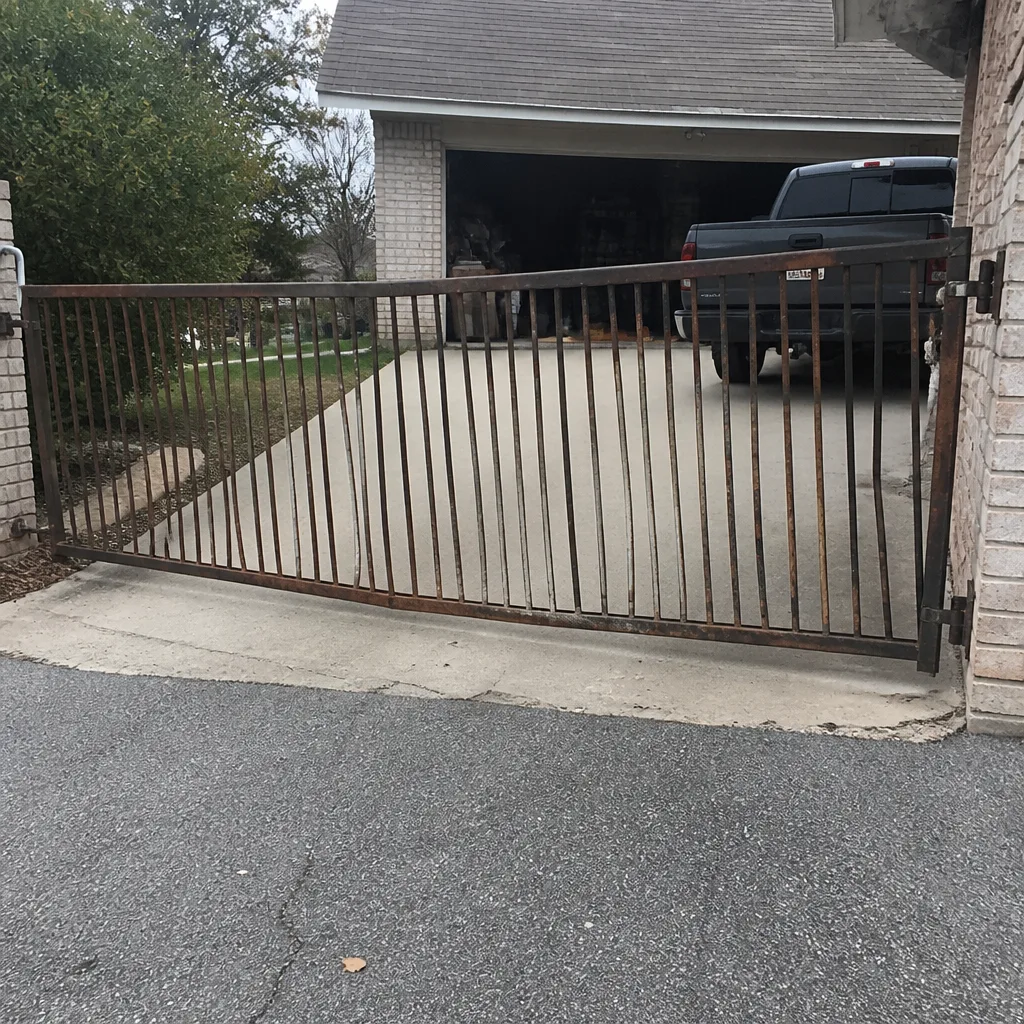 Before
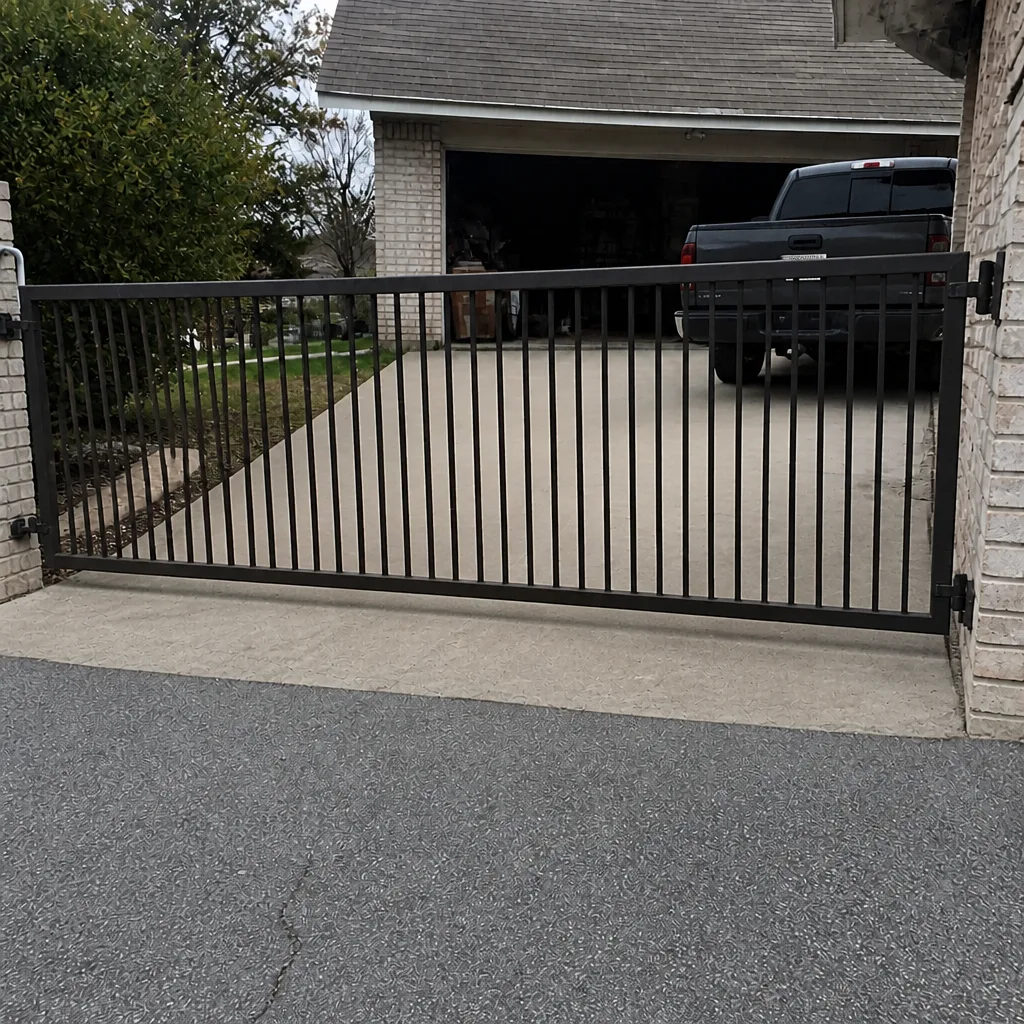 After
Common Mistakes to Avoid
- Lubricating with thin household oil before winter. It thickens and clogs in cold, making your swing gate stiff. Use a cold-rated grease on hinges and mechanical parts.
- Ignoring a dragging latch in March. That drag is often post heave talking. Leaving it means the hardware and operator absorb the misalignment all season, and a cheap fix becomes an expensive one.
- Forcing a frost-bound gate by hand. Pushing a cold-bound gate stresses gears, linkage, and the operator. If it won’t move, call rather than fight it.
- Skipping the operator battery test. A battery that works fine in autumn can fail mid-winter. Load-test it in fall so you’re not surprised in January.
- Redirecting drainage toward the posts. Any water that freezes at the post base can lift it. In Highlands Ranch, grading and downspouts matter as much as the gate itself.
- Cranking up sensitivity to force a gate closed in cold. Overriding the obstruction response on a safety edge is a real hazard. Proper tuning, not brute force, is the answer.
- Leaving dark iron exposed to UV. A fading powder-coat on a high-sun gate lets moisture in and oxidation start. Touch-ups each season protect both look and structure.
When to Call a Professional
Some tasks belong on your calendar; some belong in our hands. Call when your gate won’t open or close reliably, when a latch drags or a double gate’s center gap changes after a freeze, when your operator reverses without obstruction, or when the battery or control board behaves erratically in cold. Call if you’re unsure about safety edge settings, if wiring or power to the operator is involved, or if a post is loose. And call if the season has simply gotten ahead of you and you want a professional sweep of the system. Stratford Gate Repair offers free estimates in Highlands Ranch, and we work on the brand you already have, from consumer-grade openers to commercial FAAC and DoorKing operators. Call (866) 509-8380. We answer 24/7. Fast dispatch from 7am to 7pm, Sunday through Friday.
Frequently Asked Questions
Early spring, especially March and April, is the highest-risk window because winter’s freeze-thaw cycles do cumulative damage that surfaces once temperatures stabilize. Watch for a dragging latch, a changed center gap on double gates, and loose post bases. If you see these, an early assessment saves wear. Call (866) 509-8380 for an exact quote. Estimates are free.
Lubricate hinges with a cold-rated grease, load-test the operator battery with full cycles, fix drainage around post bases, touch up powder-coat damage, and tune closing speed and sensitivity for cold. None of this takes long, and it prevents mid-winter failures. If you’d rather have it done right by a specialist, call (866) 509-8380. Estimates are free.
Cold thickens grease, raises friction, and lowers battery current, so the operator sees more resistance and can slow, time out, or reverse. Many quality operators have cold or slow-close settings, but they need to be tuned properly for your specific brand. Call (866) 509-8380 for an exact quote. Estimates are free.
Sometimes, but it has to be done correctly. If sensitivity is tuned for summer, a frost-bound gate can be misread as an obstruction; cranking up the force can override a genuine safety response. Setting this right requires knowing your operator’s control board. Call (866) 509-8380. We answer 24/7. Fast dispatch from 7am to 7pm, Sunday through Friday.
Follow the calendar above: lubricate moving parts in fall before the freeze, re-lubricate and clean tracks in spring, and inspect again in June. Adjustments come when something changes, not on a fixed clock. If you’d like a professional to handle the seasonal check, call (866) 509-8380. Estimates are free.
Call. A gate that’s moved after a freeze-thaw is a gate with post heave or hardware misalignment, and early fixes are cheap. Left to wear for a season, that misalignment can stress your operator motor and hardware. Call (866) 509-8380 for an exact quote. Estimates are free.
The Bottom Line
Seasonal gate care in Highlands Ranch comes down to timing. Put your effort into the two transition seasons: fall, where a cold-rated grease, a healthy battery, and good drainage prevent winter failures; and early spring, where you catch post heave and swing misalignment before they wear out your gate and operator. Summer is for light checks and operator heat awareness, and winter is for settings and restraint, not heavy fixes. Front-load the work and you’ll have far fewer of those cold-morning surprises. If the year gets ahead of you, an on-site assessment is free. Call (866) 509-8380. We answer 24/7. Fast dispatch from 7am to 7pm, Sunday through Friday.
Written by the team at Stratford Gate Repair.