
Last updated November 15, 2026
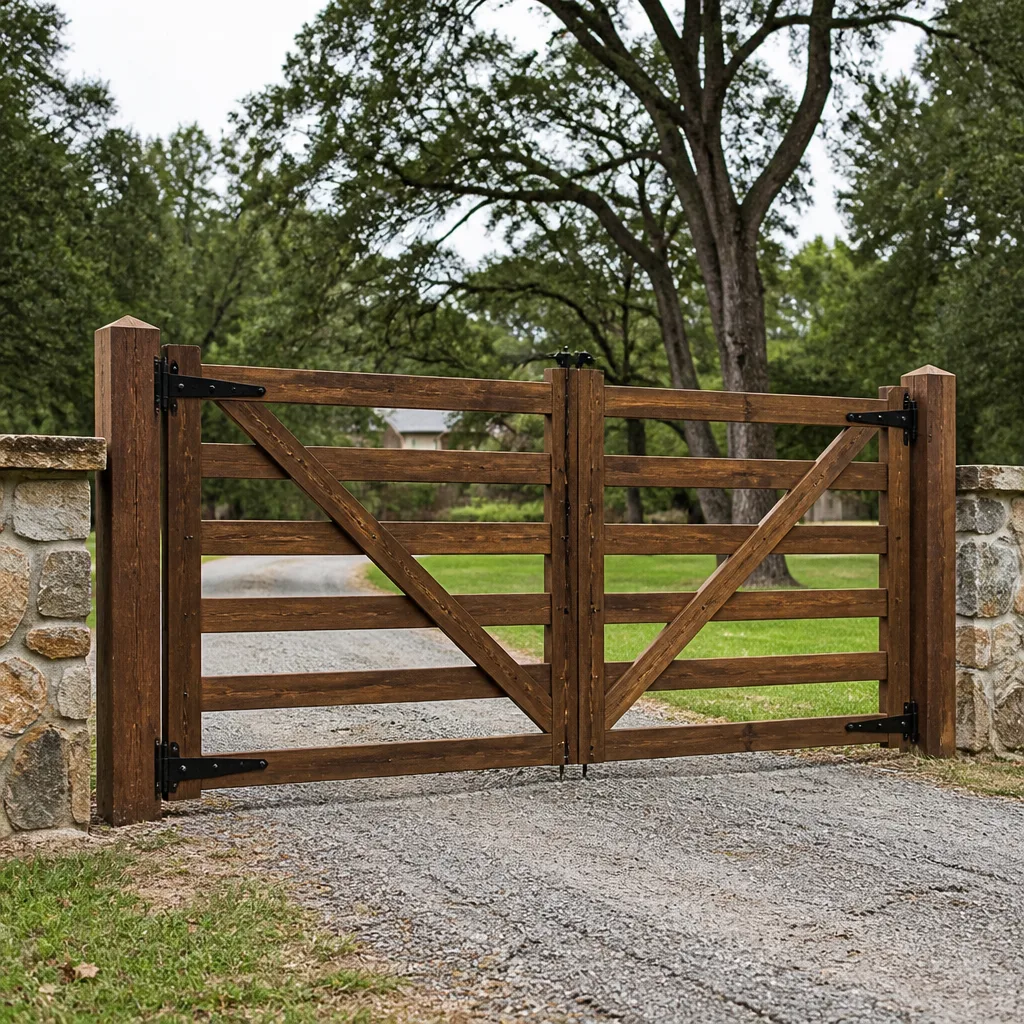 Farm & ranch
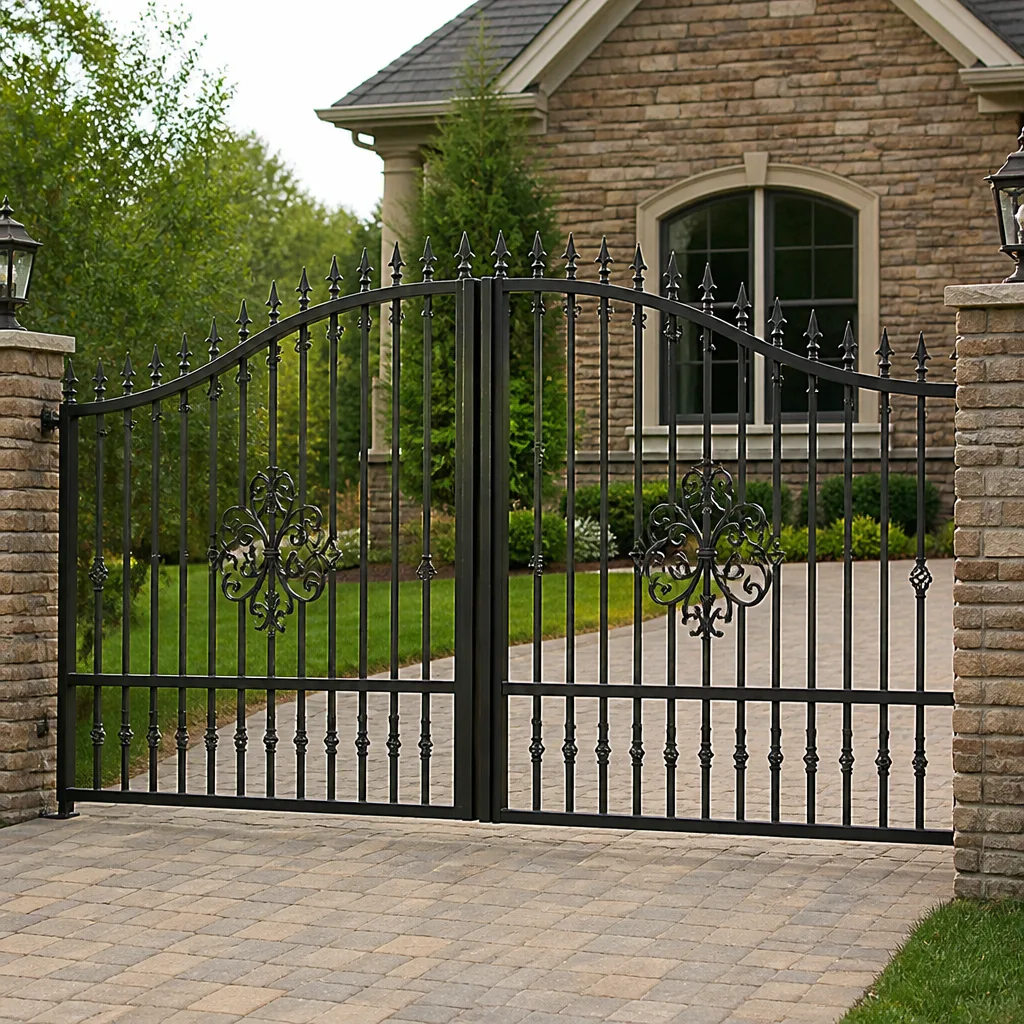 Wrought iron
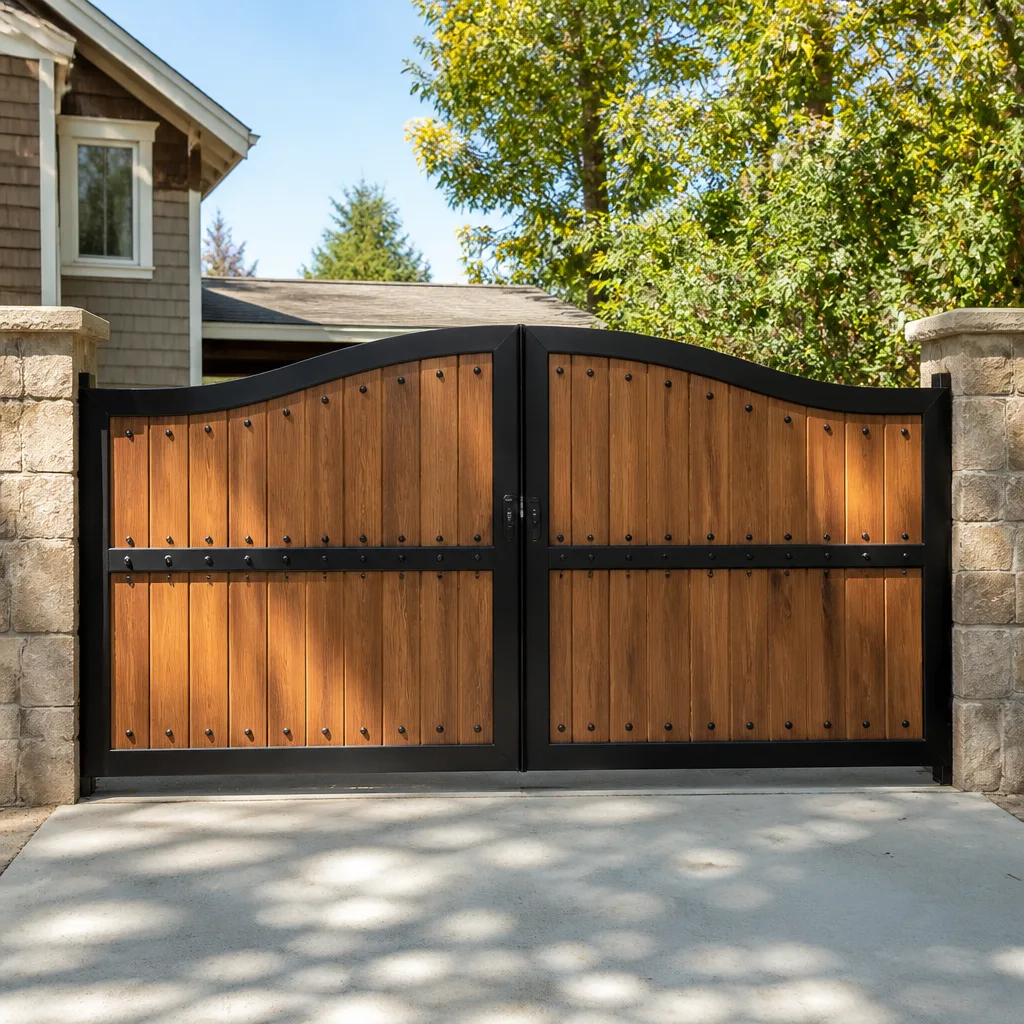 Wood & steel frame
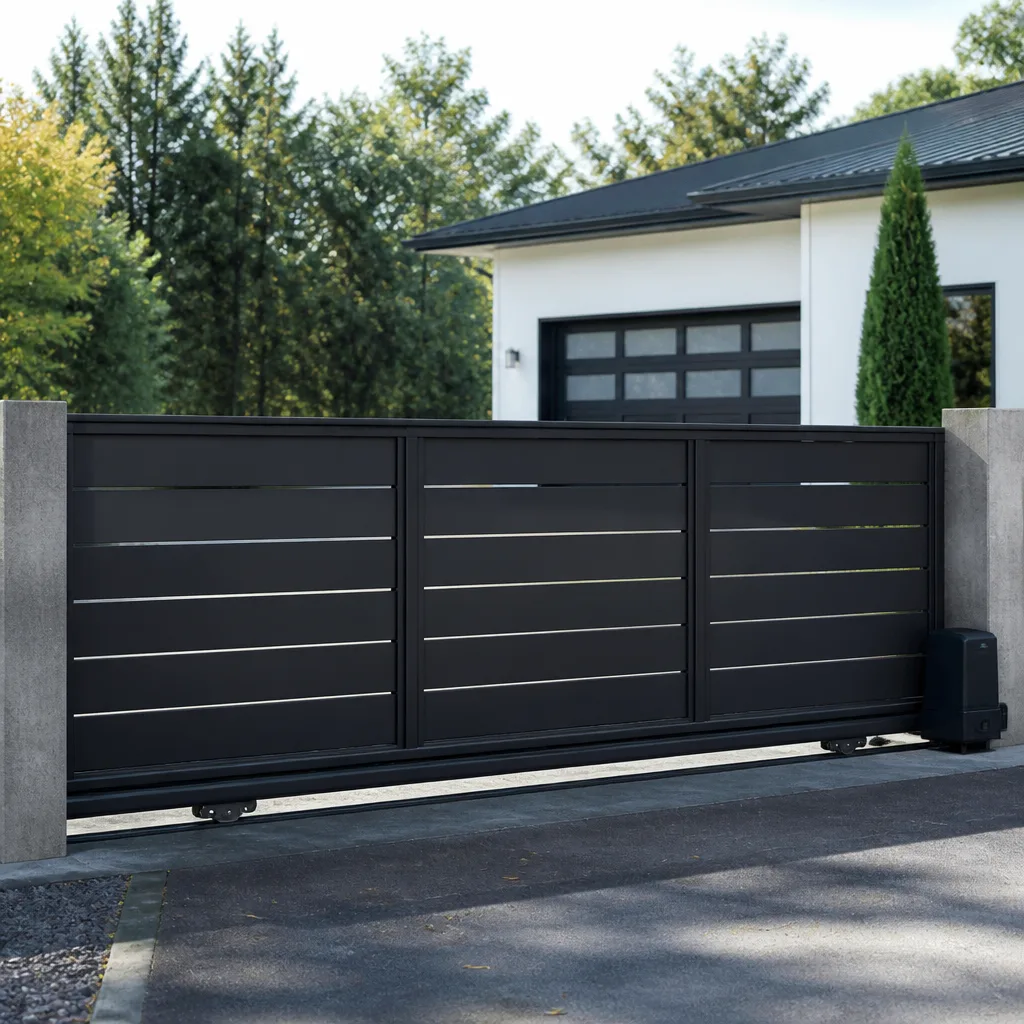 Sliding driveway gates
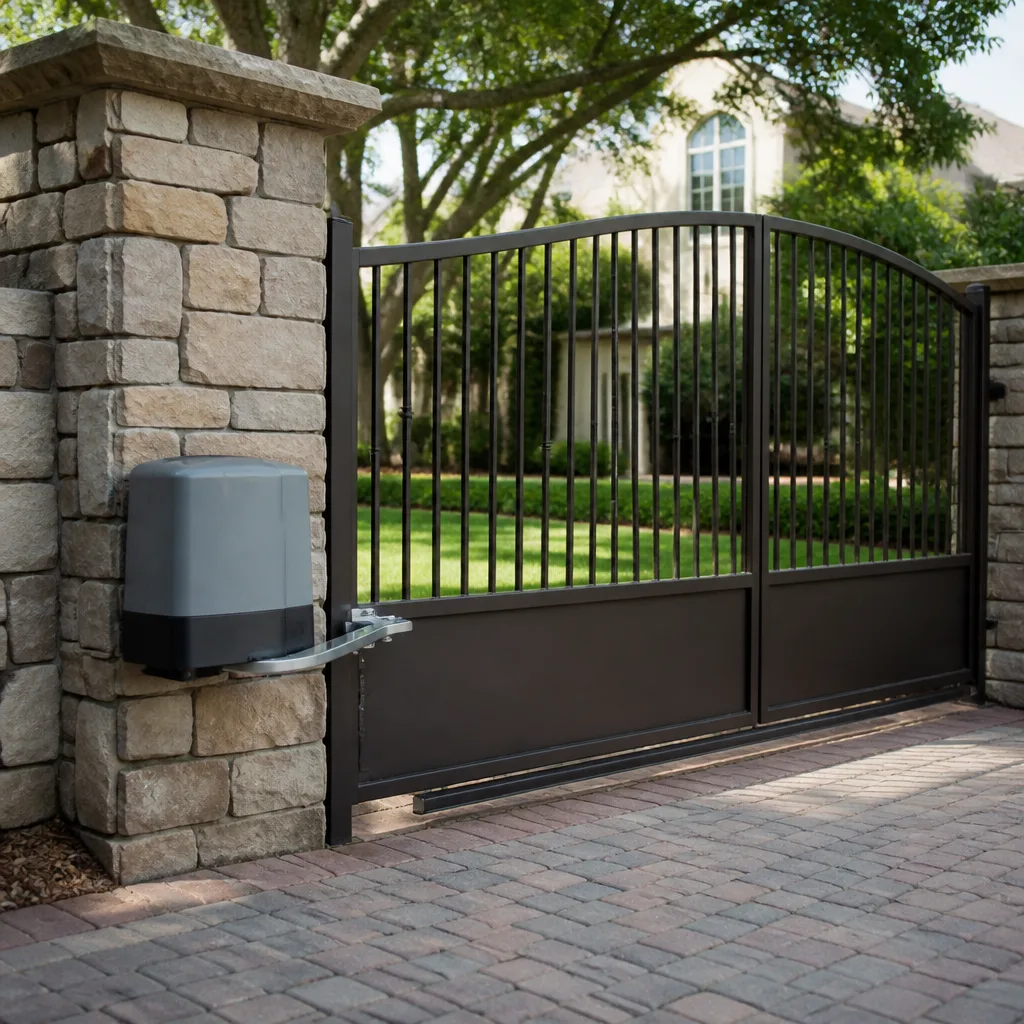 LiftMaster operators
Free on-site gate assessment - hinges, posts, and your LiftMaster or Nice gate operator checked before anything is quoted
The assessment is free and the quote is the invoice.
Get your free estimateDIY vs Professional Gate Repair: The Highlands Ranch Homeowner’s Decision Guide
DIY gate repair has a hard line most guides skip: the moment your gate has an electric operator, any mechanical adjustment you make quietly changes the load calculation the operator was calibrated for. A hinge that feels “tightened up” shifts how much torque the motor needs to swing or slide the gate, and a system that was tuned to specific resistance now fights resistance it wasn’t set for. That gap between what the operator expects and what it’s actually pushing is where a small DIY fix starts wearing on a motor or a control board. This guide isn’t a lecture about skill. It’s a decision rule. You’ll learn which repairs are genuinely safe to handle yourself, which ones carry downstream system consequences, why HOA community gates in Highlands Ranch change the math, and what prep work actually saves you money before a technician arrives.
Quick Answer
Most gate repairs split cleanly into two categories. Genuinely DIY-safe tasks include lubricating hinges and latches, tightening visible fasteners, cleaning tracks, and cosmetic touch-ups on a manual gate. Anything involving an electric or automatic operator, a safety sensor, a limit switch, a torque setting, a structural weld, or an HOA-controlled community gate should go to a specialist, because a wrong adjustment there doesn’t just leave the gate stuck. It can void a warranty, miscalibrate the operator, and cost more to reverse than the original repair would have. When in doubt, the operator side of the gate is professional territory every time.
Styles & brands we work with
- Wrought iron
- Wood & steel frame
- Farm & ranch
- Sliding driveway gates
- LiftMaster operators
Table of Contents
- The decision rule that answers it before skill enters the equation
- Repairs that are genuinely DIY-safe on a gate
- Repairs with downstream system consequences (pro-only)
- Why electric operator systems should almost never be DIY-adjusted
- How HOA community gates in Highlands Ranch change the calculus
- The hidden cost of incorrect DIY repair
- What to document before a pro arrives to reduce diagnostic time
- When to call a professional
The Decision Rule That Answers It Before Skill Enters the Equation
Here’s the rule: if the repair can change how the gate moves, how much force it takes to move, or when the operator thinks it should stop, it’s a professional repair. If the repair is purely cosmetic, or only affects a manual gate that no motor touches, it’s a candidate for DIY. Skill level doesn’t determine the answer. The system type does.
That distinction matters because “I’m handy” and “I can safely adjust an operator” are two different claims. Plenty of capable homeowners can rebuild a deck, replace a faucet, or rehang a gate that’s sagging on a manual hinge. The same person working on a LiftMaster or Mighty Mule operator is now working on a control board, a torque setting, and a safety sensor calibration that interact with each other. One wrong tweak and the gate behaves unpredictably in ways the homeowner can’t diagnose without a meter and the system’s service manual.
In Highlands Ranch, most detached-home gates fall into the manual side, so a lot of the routine maintenance is truly DIY-friendly. Community gates and driveway gates with electric operators are the ones where a specialist should be involved. Knowing which category your gate is in before you pick up a wrench is the whole decision.
Repairs That Are Genuinely DIY-Safe on a Gate
These are the tasks where a homeowner with a Phillips screwdriver, a can of lubricant, and a few minutes can safely maintain a gate without touching the operator’s load calculation. We’re not being cautious for show: these repairs don’t interact with the motor, the sensors, or any safety function.
- Lubricating hinges and latches. A dry hinge binds, and a binding hinge on a manual gate just feels bad. On an electric gate, a hinge that suddenly loosens or tightens can shift the swing resistance the operator was tuned to. Lubricate freely on manual gates; on electric gates, lubricate and then observe, don’t adjust the hinge position.
- Tightening visible fasteners. Bolts on hinges, brackets, and latch plates work loose over a Denver-area year of freeze-thaw cycles. Re-snugging them to spec is fine. If a bolt is missing or the hole has wallowed out, that’s structural and needs a pro.
- Cleaning debris from slide-gate tracks. Small gravel, mulch, and leaves compact into a slide track and make the gate drag. Clearing the track and washing it out is safe and reduces operator strain.
- Cosmetic touch-ups. Rust spots, paint chips, and dirt are all fair game. A wire brush and a rust-inhibiting paint don’t touch the gate’s mechanics.
- Latch alignment check on a manual gate. If the gate sags and the latch stops catching, a light adjustment to the strike plate can buy time. If the sag comes from the hinge or the post, that’s a professional fix.
- Visual inspection. Walking the gate monthly, checking for loose hardware, cracks at weld points, and post movement, is the single most useful thing a homeowner can do without tools.
Notice what’s not on that list: anything that changes where the gate ends its travel, how hard it pushes, or whether it stops for an obstruction. That’s the boundary. Everything past the boundary belongs to the professional side of this guide.
Repairs With Downstream System Consequences (Pro-Only)
These repairs look like small fixes until you consider what they trigger elsewhere in the system. This is where DIY gets expensive not because the homeowner can’t turn the bolt, but because the bolt wasn’t the whole system.
- Hinge or post realignment on an electric gate. Moving a hinge changes the gate’s swing resistance. Some operators compensate; some don’t. The ones that don’t burn through a motor or trip the safety reverse every cycle.
- Opener arm or slide rack adjustment. On a LiftMaster or FAAC operator, the arm geometry is set at install. Adjusting it without recalibrating the operator is how gates start reversing mid-travel or stopping short.
- Limit switch adjustments. Limit switches tell the operator where the gate is allowed to stop. Wrong settings mean the gate slams into a post, reverses on itself, or sits ajar. Never a DIY job.
- Safety sensor work. Photo-eye sensors and loop detectors are the gate’s primary injury-prevention system. Replacing or repositioning one requires calibration against the operator’s logic, not just physical alignment.
- Control board replacements. Swapping a board is a hardware task. Configuring it to the motor’s characteristics, the sensor types, and the safety edges is the actual repair.
- Battery backup, solar charging, and low-voltage power. These interact with the operator’s charge and failover logic in ways that are hard to eyeball.
- Weld repair and structural post work. A cracked post or a broken weld moves the entire gate. Adjusting one without checking the rest produces a gate that eventually fails somewhere else.
- Anything HOA-governed. Covered in the next section, but it belongs on this list too.
If you’re dealing with any of the above on a residential driveway gate in Highlands Ranch, this is the point where specialty experience matters more than general handiness. Our gate repair service handles the mechanical side and the operator side together, because they don’t fail separately.
Why Electric Operator Systems Should Almost Never Be DIY-Adjusted
An electric gate operator is a system, not a part. Three things inside it have to agree: the limit switches (where travel starts and stops), the torque setting (how much resistance the operator will push through before it assumes something is stuck), and the safety sensor calibration (what counts as an obstruction). Adjust one without touching the other two, and the system starts behaving unpredictably.
The mechanics behind that: torque settings are there to protect people and machines. If you tighten the torque to compensate for a binding hinge, the operator no longer knows the difference between a slightly stiff gate and a person standing in the path. If you loosen the torque, a gate that should push through a leaf now stalls on every cycle. The limit switches tell the motor when to cut out; if they’re set past the physical stop, the operator keeps pushing and eventually grinds a drive gear. Safety sensors that are meant to reverse the gate on obstruction only do that if the operator’s control board has been taught what “obstruction” looks like for this specific gate.
Brands like FAAC, BFT, LiftMaster, and Mighty Mule all follow that logic, even though their tuning methods differ. That’s why our technicians have up to experience specifically across electric gate repair and mechanical gate repair: the diagnosis depends on knowing the system, not just turning the right screw.
A safety note worth writing down: gate operators are automated mechanical systems that can crush, pinch, and strike. Never work inside an energized operator housing, never bypass a safety sensor to “test” whether the gate will close, and never disable the reverse-on-contact function for any reason. A trained professional should handle anything that touches the operator’s power or safety logic.
How HOA Community Gates in Highlands Ranch Change the Calculus
Highlands Ranch is full of planned communities with shared gates and community entry systems, and that changes what “DIY repair” even means when the gate isn’t solely yours. On a single-family gate in your own driveway, a cosmetic fix or a hinge lubrication is your call. On a gate your HOA governs, the calculus shifts toward the professional every time, for three reasons.
- Modifications can be reversed at your cost. Most HOAs treat unauthorized changes to shared entry gates as a compliance issue. That includes hardware swaps, sensor bypasses, and operator re-tuning. Even a fix that “works” can be flagged, and the HOA can require the gate be returned to the approved configuration with the cost falling on the property owner who made the change.
- Safety and liability are shared. A community gate fails differently than a private gate because it cycles dozens of times per day, which is far more cycles than a residential operator was ever designed for. A homeowner-side tweak that raises the torque on a high-cycle community operator is a liability question, not just a repair question.
- Documentation matters. HOAs and property managers want a service record for anything that gets touched on a community gate. A specialist who diagnoses by system and documents the diagnosis in writing gives the community a paper trail; a homeowner-side fix doesn’t.
For HOAs and property managers managing high-cycle entry gates in Highlands Ranch, the professional side of this decision isn’t really a decision. It’s the standard. Commercial-grade systems like DoorKing, BFT, and FAAC logic are built for duty cycles that a homeowner never sees, and they should be serviced by someone who knows the difference.
If your community gate is failing, ask the HOA board or property manager to pull the service record and confirm the gate is being serviced by a specialist rather than a general property-maintenance vendor. That alone lowers long-term cost more than any DIY fix ever could.
The Hidden Cost of Incorrect DIY Repair
The visible cost of a DIY repair is the parts and the time. The hidden cost is what happens afterward, and it usually shows up in three places:
- Voided warranties. Many operator manufacturers void coverage on their hardware when a system has been adjusted or replaced by someone other than a qualified technician. That means a self-installed control board can cost you coverage on the whole operator, not just the part you swapped.
- Cascading wear. A misaligned hinge makes the operator work harder on every cycle. That extra load doesn’t blow the motor the day you adjust it; it wears down gear teeth and bearings over months. When the motor finally fails, the diagnosis is a full operator replacement, not a hinge fix.
- Diagnostic premium on amateur work. An honest specialist has to figure out not just what’s broken, but what was changed. Undoing a DIY repair means working back to a baseline configuration first, and that’s billed time the homeowner pays for on top of the actual fix.
Specific failure chains we see with common residential operators follow the same pattern. A homeowner tightens a binding hinge on a Mighty Mule system to “fix the sag,” the operator’s torque is now mismatched to the actual load, and the safety reverse function starts firing on a stiff spot. The homeowner tightens the hinge further to stop the reverse. Eventually the operator hits its current limit and the control board goes. The original problem was a hinge. The final bill is a board swap.
That’s the shape of the hidden cost: the DIY fix is often a legitimate repair on a system that has downstream consequences the repair didn’t address. Our Stratford Gate Repair team diagnoses the gate system first and the repair second, precisely so that a hinge problem gets fixed as a hinge problem, not as a hinge-plus-control-board problem later.
What to Document Before a Pro Arrives to Reduce Diagnostic Time
There is real, useful prep work a homeowner can do before a specialist arrives, and it directly reduces billable diagnostic time because it turns the visit into a targeted repair instead of an investigation. None of it involves opening the operator or touching the sensors.
- Write down the operator brand and model, if visible. Pull the label on the operator housing (don’t open it). Note the model number. That alone tells a technician which service manual and which control logic to expect before they leave.
- Log the symptoms. “Gets halfway and reverses” and “won’t move at all” and “beeps and stops” are three entirely different problems. A short written log of when the gate fails, whether it’s a specific time of day, and whether anything else changed recently narrows the diagnosis dramatically.
- Photograph the gate at the point of failure. A gate that stops ajar, a sensor that faces a spot the sun hits at 4pm, a hinge with visible wear, a gate that sits off its track. Photos let the technician arrive with the right part on hand more often.
- Note the last thing that happened. Recent power outage, recent storm, recent landscaping near the gate, recent dog that pulled on the gate, recent HOA paint job. Anything that changed since the gate last worked normally matters.
- Check the visible safety sensors without touching them. Note whether the sensor LEDs look normal (most have a small light) and whether any plant has grown in front of a photo-eye lens. Clear the plant. Don’t realign the sensor.
- Note the property type. Private driveway gate, HOA community gate, or commercial entry gate. Each is serviced under a different expectation, and the technician will triage differently.
That said, the highest-value prep work is the earliest phone call. We answer 24/7, and fast dispatch from 7am to 7pm means the gate can usually be diagnosed the same day it fails. Call (866) 509-8380 for a free estimate; the more of the above you can tell us on the call, the faster we can put the right specialist on the job.
Common Mistakes to Avoid
- Bypassing the safety sensor to “test” the gate. The safety sensor is the gate’s primary injury-prevention system. Disabling it to see whether the gate closes is how people get hurt, and it’s the single most common mistake we see on residential gates in Highlands Ranch.
- Tightening torque to compensate for a stiff gate. The torque setting exists to protect people and machinery. Cranking it up to push through a hinge binding hides the real problem and burns down the operator over time.
- Adjusting limit switches without recalibrating the operator. Limit switches and the operator’s logic are taught together. Changing one without the other is how a gate starts slamming into a post or stopping short of full-close.
- Buying a replacement operator before diagnosing the current one. A gate that won’t open is often a control board, a sensor, or a wiring problem, not a dead motor. Replacing the operator without diagnosis is the most expensive version of the repair.
- Working on a community gate without HOA sign-off. Highlands Ranch HOAs treat unauthorized changes to shared gates as compliance issues. A fix that works today can still trigger a reversal at owner cost.
- Pressure-washing an operator or control housing. A wet control board fails in ways that look like a motor problem. Keep water off the operator and only clean the gate surfaces.
- Assuming a big brand name operator means any handyman can fix it. A LiftMaster system and a DoorKing community system require very different troubleshooting. Depth of gate-specific experience matters more than general handiness.
See the difference
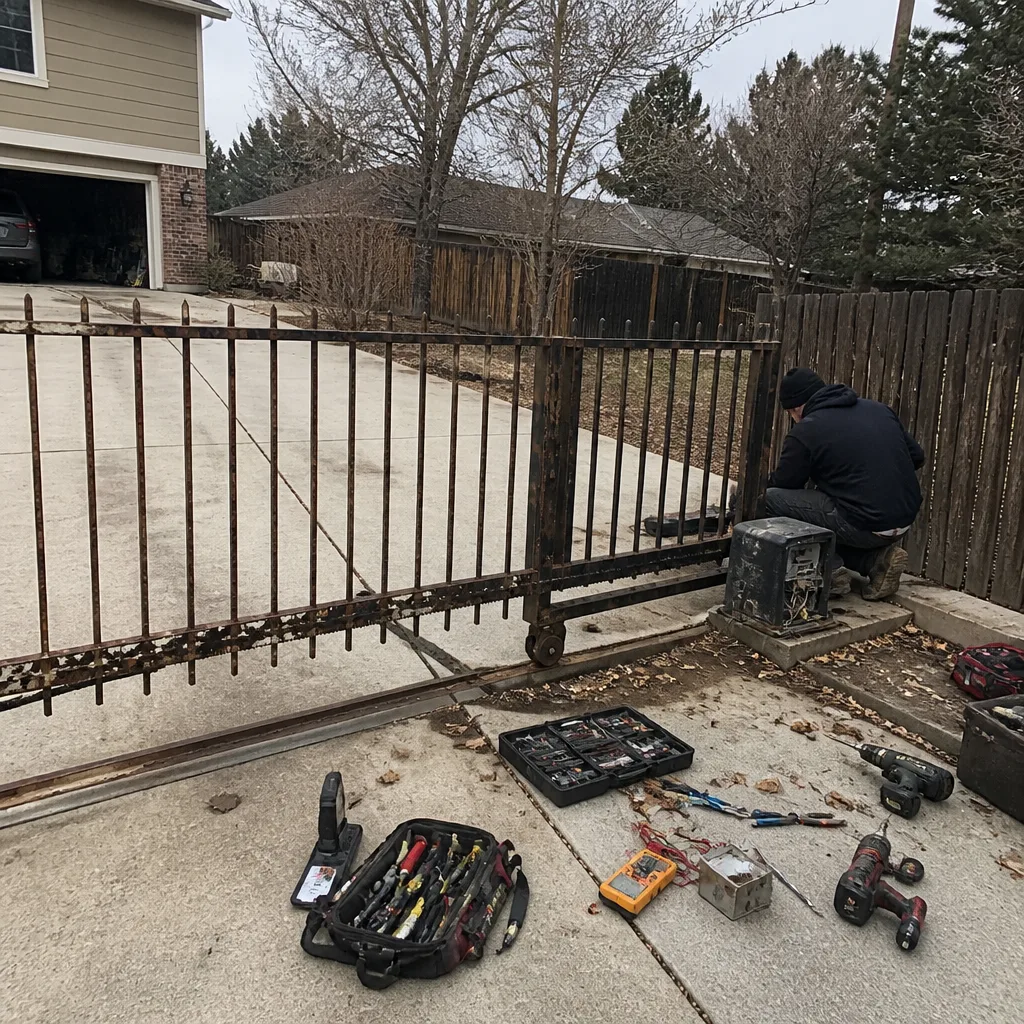 Before
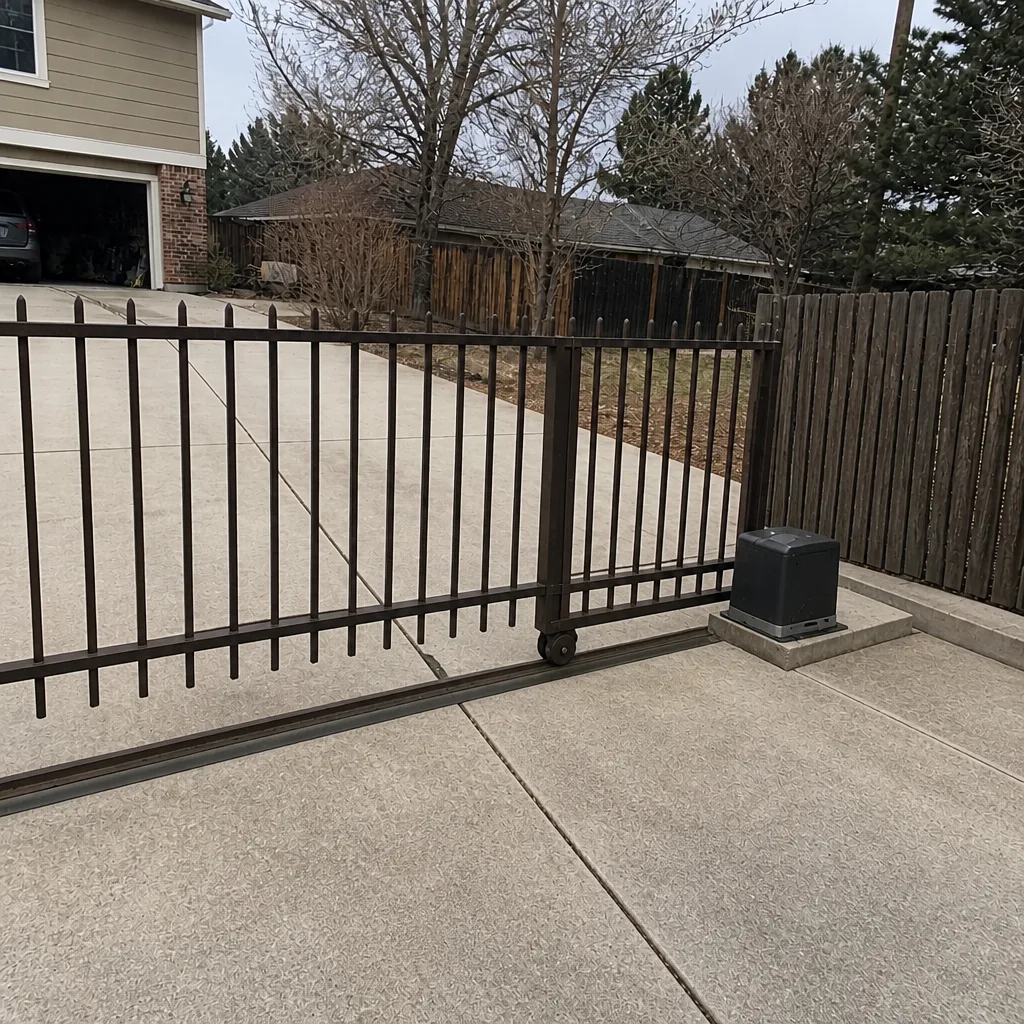 After
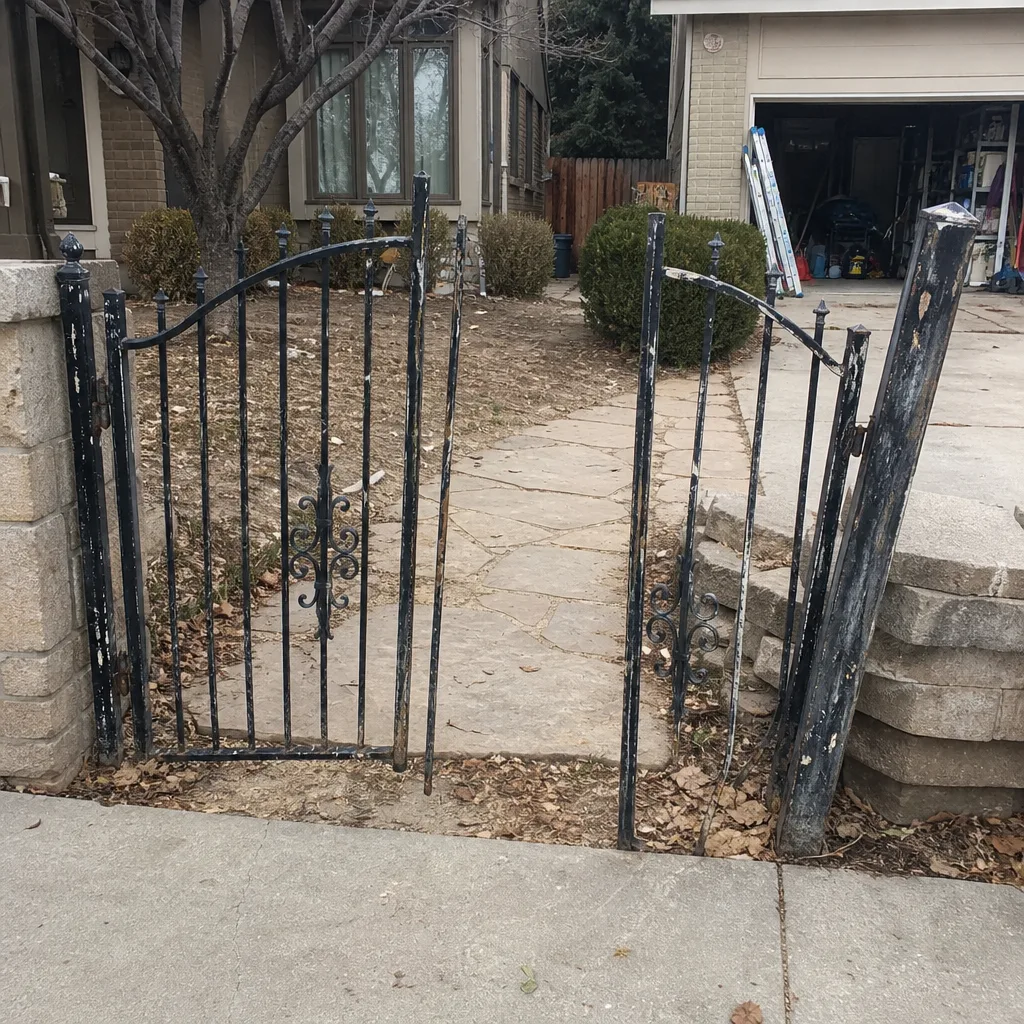 Before
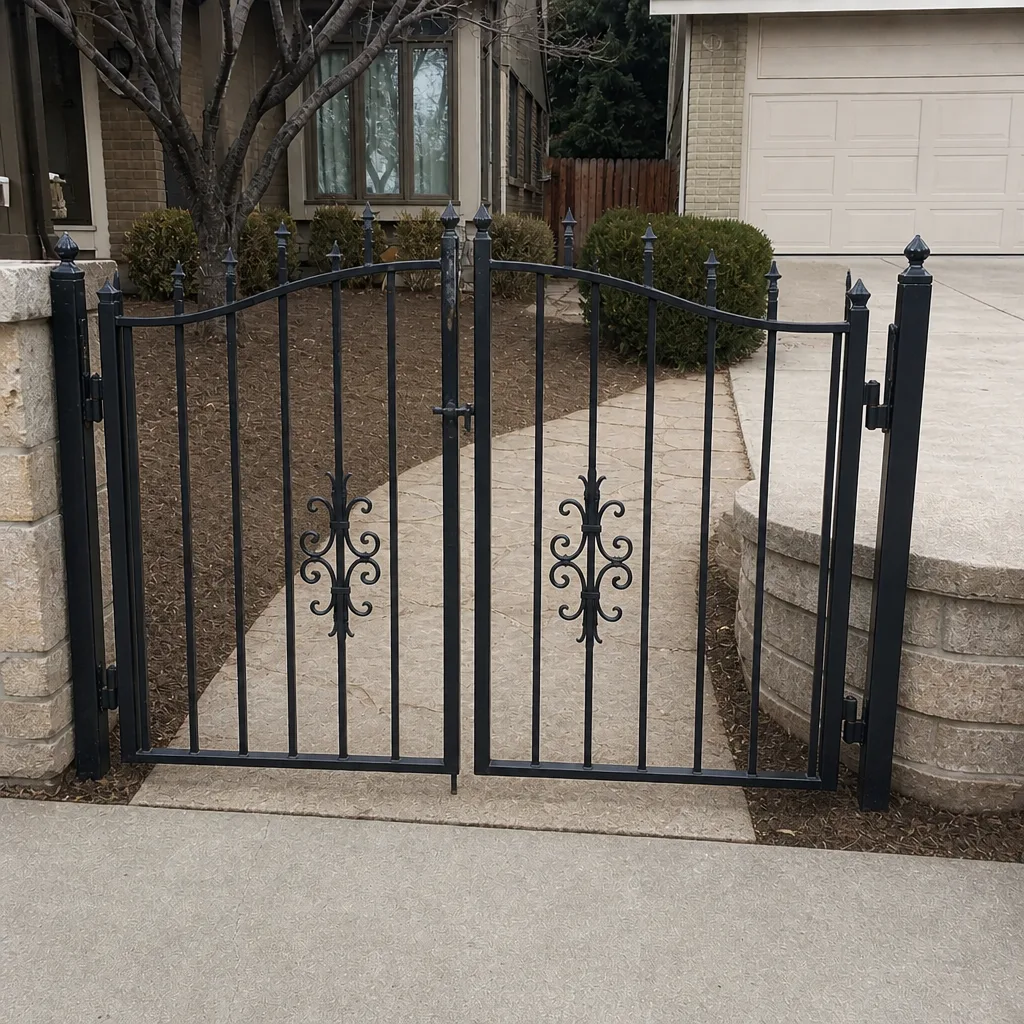 After
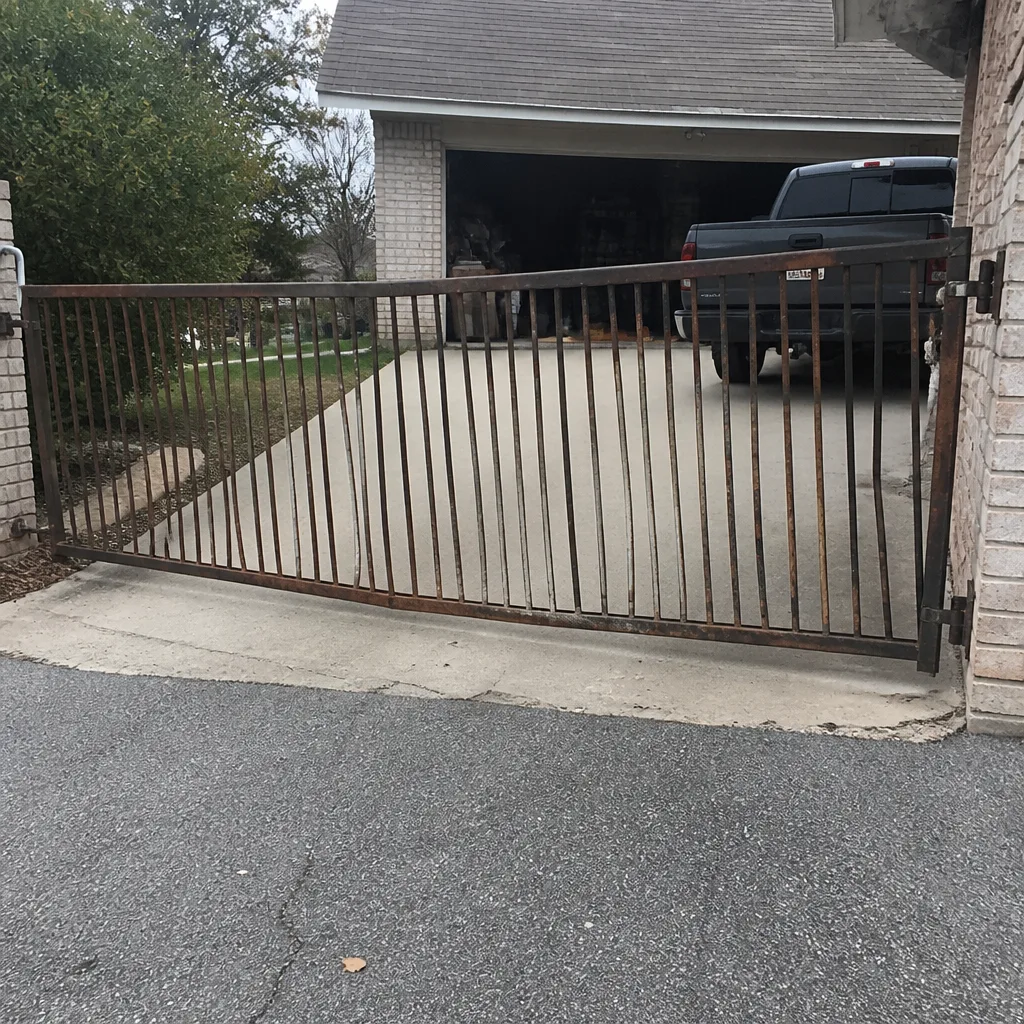 Before
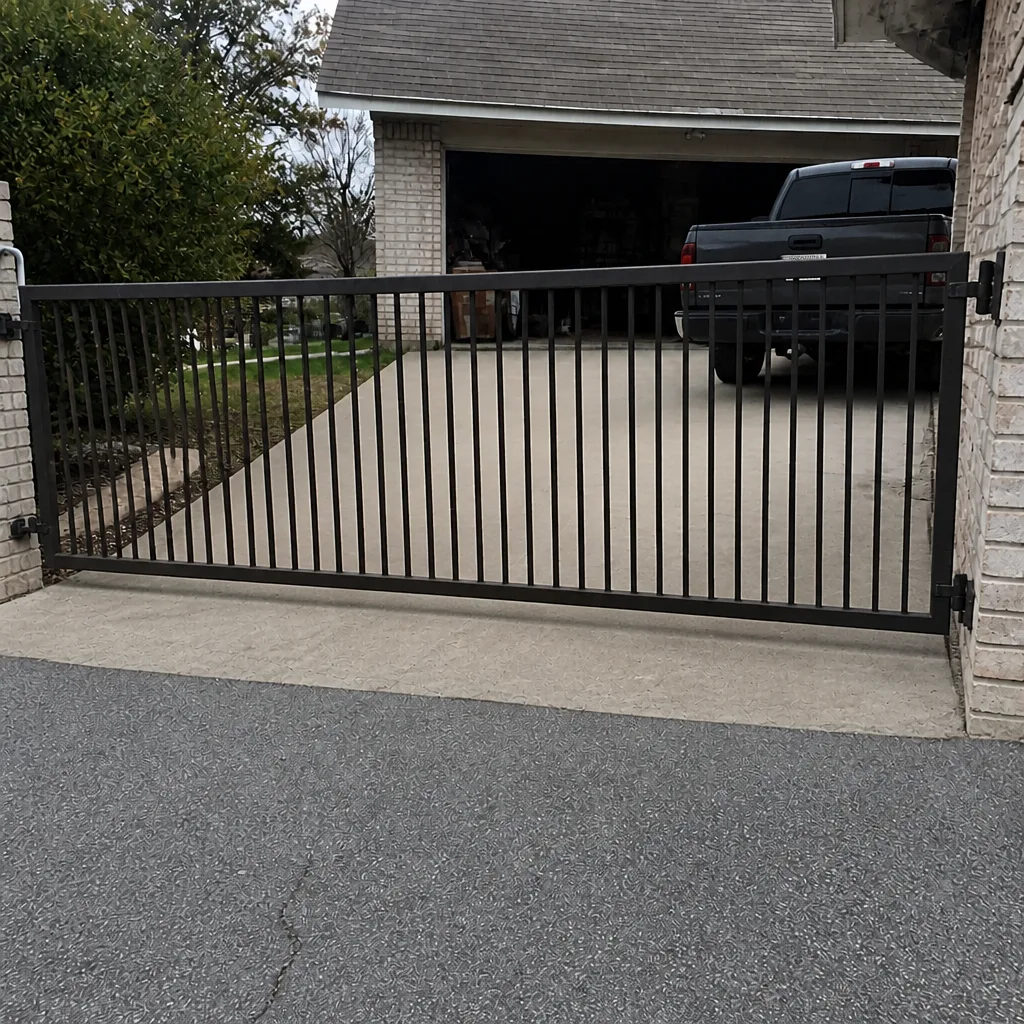 After
When to Call a Professional
Call a specialist the moment the failure involves an electric or automatic operator, a limit switch, a safety sensor, a control board, a structural weld, a post, or an HOA-governed gate. Also call when the gate has stopped trusting itself: reversing mid-travel, stopping short, beeping and refusing to move, or cycling on and off with no obvious cause. Those symptoms almost always trace to a system interaction that a homeowner can’t safely diagnose without the right tools. Cosmetic and manual-gate maintenance can stay in your hands. If the gate moves, stops, or senses anything, it’s professional territory. Stratford Gate Repair offers free estimates in Highlands Ranch; call (866) 509-8380 and we’ll help you sort out which side of the line your repair falls on.
Frequently Asked Questions
Yes for cosmetic and manual-gate maintenance, no for anything involving an electric operator or a safety sensor. Lubricating hinges, tightening visible bolts, cleaning slide-gate tracks, and touching up paint are all safe DIY tasks on a manual gate. Adjusting limit switches, torque settings, sensor alignment, or any control board on an electric operator is not, because those systems interact in ways that produce failures the homeowner can’t diagnose and often can’t safely test.
No. Torque settings determine how much resistance the operator pushes through before it assumes an obstruction, and raising or lowering torque affects the gate’s safety behavior. Tightening torque to compensate for a binding hinge hides the real problem and eventually damages the operator. Loosening it makes the operator stall on small obstacles. Call (866) 509-8380 for a free estimate and a specialist will diagnose the actual cause.
It can. Most operator manufacturers void coverage on their hardware when it’s been adjusted or replaced by anyone other than a qualified technician, and coverage can extend beyond the swapped part to the whole operator. If the gate is under warranty, the cost of a DIY fix isn’t just the failed part. It’s the coverage you lose on a full operator replacement. Call (866) 509-8380 before touching a warrantied system.
No, not without HOA authorization, and often not even with it. Highlands Ranch HOAs treat community gates as shared infrastructure and unauthorized modifications as compliance issues that can require reversal at the property owner’s cost. Community gates also cycle far more often than residential gates, which affects which parts wear and how they should be serviced. Community-gate repairs should go through a specialist with a documented service record.
Document the failure and leave the system alone. Write down the operator brand and model from the visible label (don’t open the housing), log whether the gate reverses mid-travel or stops short, photograph where it fails, note any recent power outage or landscaping change, and clear any plant growth from in front of the safety sensors. Those details reduce diagnostic time and often mean the technician arrives with the right part. Call (866) 509-8380 for the estimate.
Gate repair is priced per job by the written estimate, not by a flat rate, because the range of repairs runs from a minor hinge adjustment to a control board replacement or operator issue. The estimate is free, and the price is quoted and agreed before any work starts. Call (866) 509-8380 to schedule and get an exact figure for your gate.
The Bottom Line
The DIY vs professional question isn’t about how handy you are. It’s about which system on the gate is affected, and Highlands Ranch makes that distinction especially sharp because so many gates here are either HOA-governed or running electric operators. Cosmetic touch-ups and manual-gate maintenance can stay in your hands. Anything that changes how the gate moves, stops, or senses is specialist work, because the downstream cost of a wrong adjustment lands on the operator, the safety system, and the warranty, not on the hinge you were trying to fix. When in doubt, call before you turn a bolt. Our technicians have up to experience across the brands you already own, from residential Mighty Mule and LiftMaster systems to commercial-grade FAAC and BFT operators, and our free estimate is written before any work begins.
Call (866) 509-8380 for a free estimate. We answer 24/7. Fast dispatch from 7am to 7pm, Sunday through Friday. The price is quoted and agreed before any work starts, and if your gate needs a full replacement rather than a repair, one call covers the diagnosis, the repair, and the install.
Written by the team at Stratford Gate Repair.