
Last updated November 15, 2026
 Farm & ranch
 Wrought iron
 Wood & steel frame
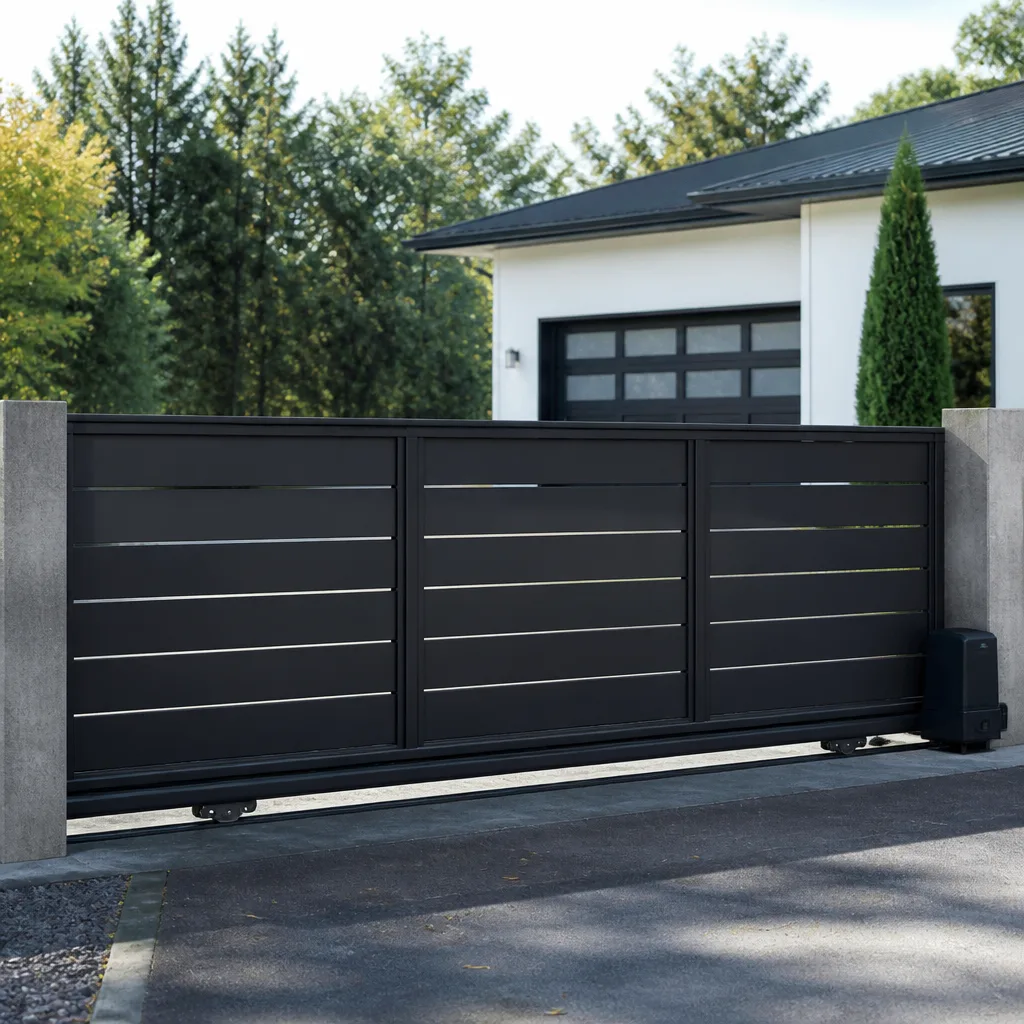 Sliding driveway gates
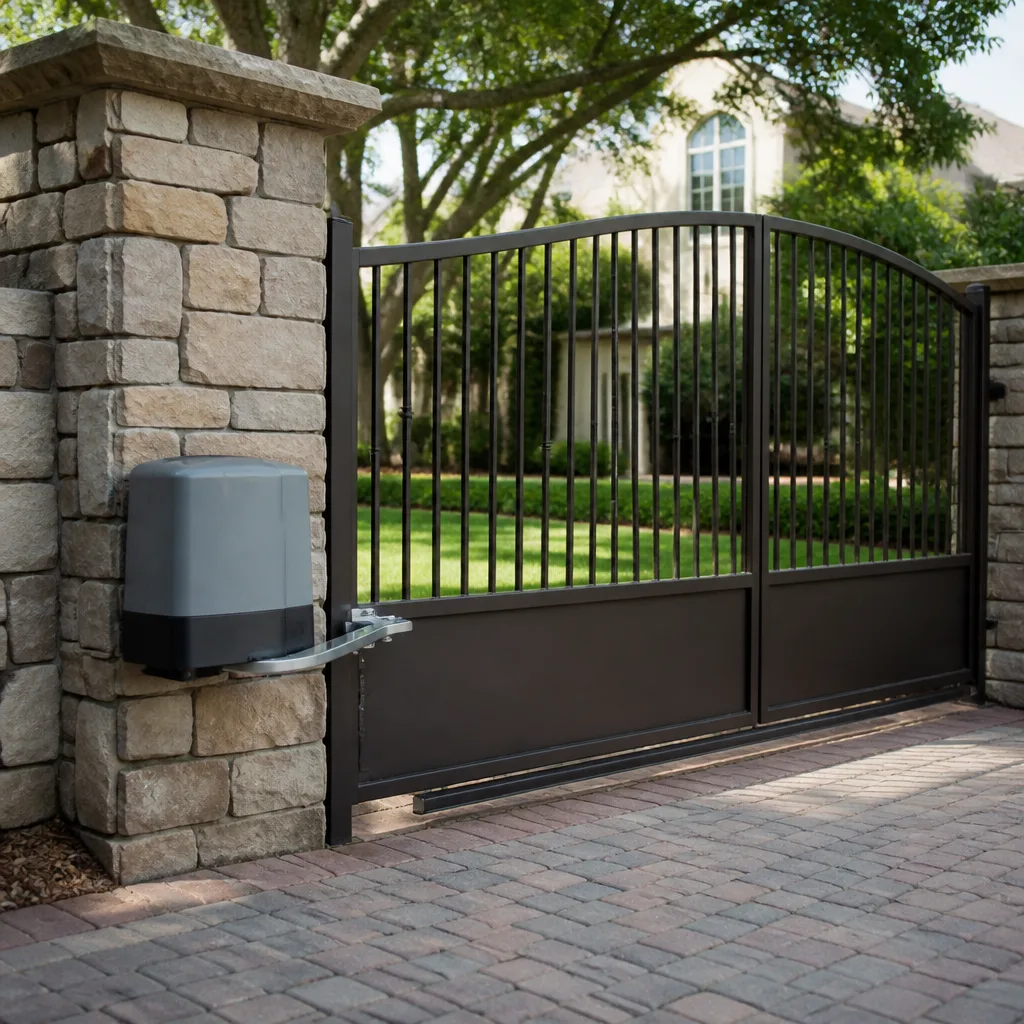 LiftMaster operators
Free on-site gate assessment - hinges, posts, and your LiftMaster or Nice gate operator checked before anything is quoted
The assessment is free and the quote is the invoice.
Get your free estimateGate Repair Troubleshooting in Highlands Ranch: Common Problems and How to Fix Them
A gate that reverses before it closes isn’t broken – it’s communicating. The mistake most homeowners make is replacing parts when the gate is telling them exactly what’s wrong. A reverse-on-close is the safety system doing its job. Grinding is a mechanical issue. Won’t open at all is usually a power or control fault. Three different roots, three different fixes. In this guide, we’ll walk you through how to read your gate’s symptoms the way a specialist does, so you can decide what’s safe to reset yourself and what needs a trained eye. Whether your gate is in Highlands Ranch or anywhere across the Front Range, most failures come down to alignment, power, or wear – and figuring out which one you’re dealing with cuts diagnosis time in half.
Quick Answer
Most gate problems in Highlands Ranch fall into three categories: alignment faults (the gate drags, sticks, or reverses unexpectedly), power and control faults (the operator won’t respond, blinks a code, or moves erratically), and mechanical wear (worn hinges, sagging posts, grinding tracks). A gate that reverses on close is usually a photo-eye or safety-edge issue, not a motor failure. A gate that won’t open at all is usually a power, remote, or control-board problem. Grinding and slow movement point to mechanical wear or a failing operator. Test the manual release first – if the gate swings freely by hand, the problem is electrical. If it doesn’t, the problem is structural.
Styles & brands we work with
- Wrought iron
- Wood & steel frame
- Farm & ranch
- Sliding driveway gates
- LiftMaster operators
Table of Contents
- How to Map Your Gate’s Symptoms to the Right System
- Why Freeze-Thaw Cycles in Highlands Ranch Stress Gates Differently
- Operator Faults vs. Mechanical Faults: Fixing the Wrong One Costs Twice
- What You Can Safely Reset Yourself vs. What Needs a Specialist
- The 30-Second Manual Release Test
- The Six Most Common Gate Failures We See in Highlands Ranch
- When to Call a Professional
How to Map Your Gate’s Symptoms to the Right System
Before you touch anything, watch your gate through one full open-and-close cycle. What it does – and doesn’t do – narrows the problem to a specific subsystem. Here’s how the symptoms map:
- Reverses before closing: The photo-eye (safety beam across the driveway) is blocked, misaligned, or dirty. Or the safety edge on the gate itself is triggering. This is a safety system response, not a motor fault. Even a small branch, a leaf pile, or a shift in the mount bracket can trip it.
- Won’t open at all: Usually a power issue – tripped breaker, dead battery in the operator, control board fault, or a remote that’s lost its programming. On systems like Ghost Controls and Mighty Mule, dead batteries and lost remote pairing are the two most common causes.
- Opens but won’t close: Safety system, limit switch, or a control board set to a one-way mode. DoorKing and LiftMaster systems will sometimes default to “open only” after a fault.
- Grinding or squealing: Worn hinges, dry pivot points, a damaged wheel on a slide gate, or debris in the track. Grinding is mechanical, not electrical.
- Slow or sluggish movement: A failing motor capacitor, low battery, or mechanical drag from worn hardware. On older Elite and Linear operators, a slow gate often points to the capacitor.
- Moves partway, then stops: Limit switch out of adjustment, obstruction sensor, or encoder fault. This is nearly always a control-side issue.
- Gate sags or drags on the ground: Hinge pin wear, footing settlement, or post movement. Structural, not electrical.
Each symptom cluster points to a different subsystem: safety system, power and control, mechanical hardware, or structural mounting. Once you know which subsystem you’re in, the next step is confirming whether the fault is in the operator or the physical gate.
Why Freeze-Thaw Cycles in Highlands Ranch Stress Gates Differently
Highlands Ranch sits on the western edge of the Denver Basin, and the area sees hard freezes and daytime thaws throughout the winter. That cycle does specific damage to gates that warmer climates don’t have to worry about. When water seeps into a footing, a hinge pin, or a weld joint and then freezes overnight, it expands. When it thaws the next day, it leaves a small gap. Repeat that over a season, and the gap becomes real movement.
The three failure points we see most often from freeze-thaw in Highlands Ranch:
- Concrete footings: Water collects at the base of the post, freezes, and lifts or cracks the concrete around it. The post starts to lean. The gate sags. Over a couple of seasons, the sag is visible from the street.
- Hinge pins: Wet hinge pins and dry hinge pins fail in different ways. Wet pins rust and seize. Freeze-thaw cycles work the pin in and out of its sleeve, widening the tolerance. Either way, the gate starts to drop and drag.
- Weld joints: Welds on steel frames crack when the metal contracts and expands. A hairline crack at a corner of a frame is easy to miss, but it can turn into a full failure under the weight of the gate. In Highlands Ranch, a weld failure is one of the most common reasons a swing gate starts to bind.
The implication is simple: if your gate suddenly starts dragging or stops lining up with the receiver post, don’t assume the operator failed. Inspect the concrete, the hinges, and the frame first. In Highlands Ranch, structural movement after a cold snap is a common cause of what looks like an operator problem.
Operator Faults vs. Mechanical Faults: Fixing the Wrong One Costs Twice
The single most expensive mistake in gate repair is treating an operator fault as a mechanical problem, or vice versa. If your gate has a blinking LED on the operator, that light is a diagnostic code. It is telling you the operator has detected a condition. That condition could be a blocked photo-eye, a limit switch fault, a motor overload, or a safety-edge trigger. Pull the manual for your brand – LiftMaster, FAAC, BFT, Linear, Viking, Ghost Controls, DoorKing, Elite, and Mighty Mule all use different blink patterns – and read the code before anything else.
Here’s the difference in plain terms:
- Operator fault: The control board knows something is wrong and is stopping the gate on purpose. Symptoms include blink codes, repeated reversing, refusing to start, or running for a set time and stopping. The physical gate may swing perfectly by hand.
- Mechanical fault: The gate is physically unable to move as commanded. Symptoms include grinding, dragging, sagging, or a gate that a strong person can’t push open. The operator may be trying to move it and failing, or it may have correctly shut down to protect itself.
When both problems exist at once – a worn hinge that’s loading the motor – you’ll see a control board fault that is actually being caused by the hinge. Replacing the control board won’t fix the hinge. Replacing the hinge will fix the board fault. That’s why a specialist checks the gate by hand before reading the codes.
For a full walk-through of what gate repair covers, our gate repair page lays out the service scope in detail.
What You Can Safely Reset Yourself vs. What Needs a Specialist
Some things you can safely check and reset yourself, and doing so will save you a service call. Others are not safe DIY territory, and we want you to know exactly where the line is.
Safe to check and reset yourself:
- Photo-eye alignment: Clean the lens on both sides of the driveway. Look for debris, spider webs, or a shifted bracket. Realign the beam so it fires across to the receiver. On most systems, a solid LED on the receiver means the beam is good.
- Remote and keypad pairing: If the gate runs from the wall button but not the remote, the remote needs re-pairing or a fresh battery. That’s a control-side issue, not a gate issue.
- Limit switch adjustment: On some swing operators, a limit switch that’s out of adjustment can be nudged back into place with the manual. Follow the brand’s procedure carefully and only with the power off.
- Obstruction check: Look along the full travel of the gate for anything the safety edge may be sensing – rocks, branches, leaf piles, or a shifting driveway surface.
- Battery check: On battery-backup operators, especially Ghost Controls and Mighty Mule systems, a weak battery will cause slow movement and reversing. Check the battery before assuming the operator is failing.
Not safe to attempt yourself:
- Motor capacitors: Capacitors hold a charge even after power is off. Discharging one the wrong way can injure you badly. This is a technician-only swap.
- Weld repairs on the gate frame: Welding a load-bearing part of a gate is structural work. A bad weld on a swing gate can fail under load and cause the gate to collapse.
- Control board replacement: Swapping a board without diagnosing the actual fault usually creates a second problem on top of the first. Let a technician trace the fault with a meter before anything gets replaced.
- Any work on the operator’s internal wiring or the power run from the house: Line voltage and low-voltage control lines are both involved, and both can hurt you. A qualified technician handles the power side.
- Footing repairs and post replacement: A leaning post means the concrete has moved. Setting a new post requires digging out the old footing and pouring a new one at the proper depth.
Our technicians have up to experience, and we work on the brand you already have rather than pushing a replacement. Full details on electric gate repair are on that page if you want to see the technical side of how we work.
The 30-Second Manual Release Test
This is the single most useful test you can run before you call anyone. It takes 30 seconds and tells you whether your problem is electrical or structural.
- Find the manual release. On most operators, it’s a keyed lever, a pull handle, or a release on top of the operator housing. Your owner’s manual will show the exact location for your brand.
- Disengage the operator according to the manual. On most residential systems this means turning the key or pulling the lever to its fully released position.
- Push the gate by hand through its full travel – from fully closed to fully open and back. Watch how it feels.
What the test tells you:
- If the gate swings freely through its whole arc: The problem is electrical. It’s the operator, the control board, the safety system, or the power source. The mechanical gate is fine.
- If the gate binds, rubs, or drags at any point in the travel: The problem is mechanical. A hinge, a wheel, a footing, or a weld has shifted. The operator is likely working correctly and shutting down because the gate is too hard to move.
- If the gate feels fine in part of the arc but binds in one spot: This is a subtle one. It often points to a hinge pin that’s worn flat on one side or a footing that’s lifted unevenly. Both are structural.
Re-engage the operator after the test. If you’re not sure whether the release is fully re-latched, don’t run the gate until a technician checks it. An unlatched operator can slam the gate.
In our experience across Highlands Ranch, this test alone narrows the diagnosis for the majority of service calls before anyone lifts a wrench.
The Six Most Common Gate Failures We See in Highlands Ranch
Every region has its patterns. Highlands Ranch has its own, driven partly by the freeze-thaw cycle, partly by the housing stock, and partly by the operator brands most common in the area. Here’s what we run into most often:
- Photo-eye misalignment after a driveway shift: A minor settling in the concrete mount is enough to knock the beam off-center. The gate reverses before closing. Cleaning and realigning usually resolves it.
- Sagging swing gate from a lifting footing: The freeze-thaw cycle widens the crack at the base of the post, the concrete lifts a fraction of an inch, and the gate starts to drag. This is the most common freeze-thaw repair in Highlands Ranch.
- Worn hinge pins on heavy gates: Wood and steel gates on older properties wear their hinge pins faster in the cold months. Once the pin is worn, the gate drops and starts scraping.
- Dead battery on solar or battery-backup operators: Ghost Controls and Mighty Mule systems that run on battery backup will slow down and reverse when the battery gets weak. A fresh battery resolves it.
- Control board faults on commercial-grade operators: DoorKing and FAAC systems at HOA entrances and apartment complexes handle high cycle counts. When a control board fault shows up, the blink code tells you what the operator wants.
- Cracked welds on steel frames: A hairline weld crack at a frame corner can grow into a full structural failure. Look for flaking paint, rust streaks at a joint, or a wobble in the gate panel itself.
If you’re in one of Highlands Ranch’s older neighborhoods, hinge pin wear and footing settlement are more common. In newer construction, the more likely issues are photo-eye misalignment after the first season of ground settling, and control-side faults on newer operators. Matching your property’s age to the failure pattern cuts diagnosis time again.
Common Mistakes to Avoid
- Replacing the operator when the gate is the problem. If the manual release test shows the gate binds, don’t buy a new operator. The new one will fail on the same hinge or footing. Fix the gate, keep the operator.
- Ignoring the blink code. The LED on your operator is telling you what’s wrong. Before anything else, pull the manual and read the pattern. Many customers come to us after swapping parts because they skipped this step.
- Pressing the remote repeatedly while the gate is reversing. Every cycle counts against the operator’s life. Stop pressing and diagnose. On a high-cycle system like a DoorKing gate at an HOA entrance in Highlands Ranch, that’s a real cost over time.
- Adjusting the photo-eye by hand without cleaning it. A dirty lens looks misaligned. Clean first, then check alignment. Half of what look like photo-eye alignments in Highlands Ranch turn out to be a leaf, a cobweb, or a smear.
- Ignoring a low battery on a solar system. Solar-powered operators like the ones many Highlands Ranch properties use need a battery that holds charge through the winter. A weak battery looks exactly like a failing operator.
- Trying to weld a load-bearing gate frame yourself. A bad weld on a swing gate can fail under load. Structural repairs belong with a technician who can inspect the whole gate.
- Assuming a slow gate is a dying motor. Slow movement is often a capacitor, a weak battery, or mechanical drag. All three are cheaper fixes than a new operator. Diagnose before you replace.
See the difference
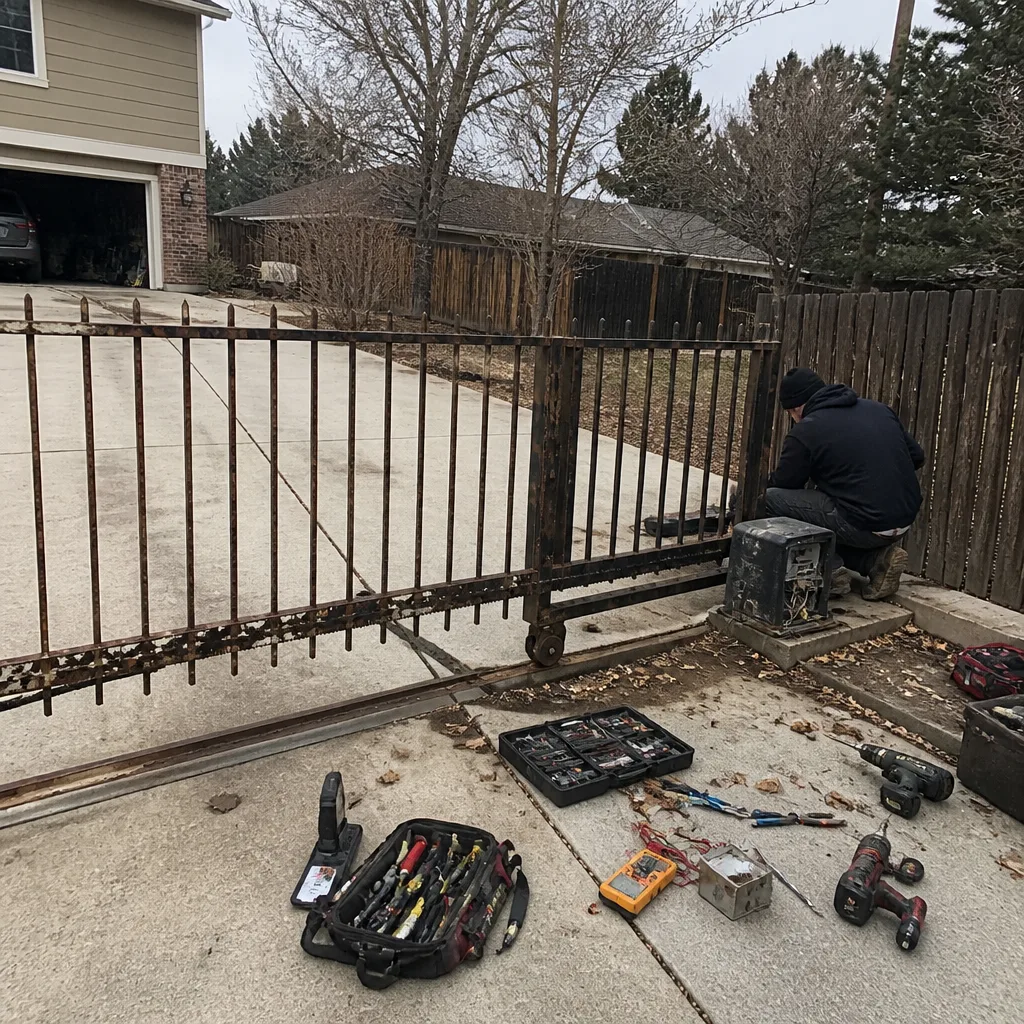 Before
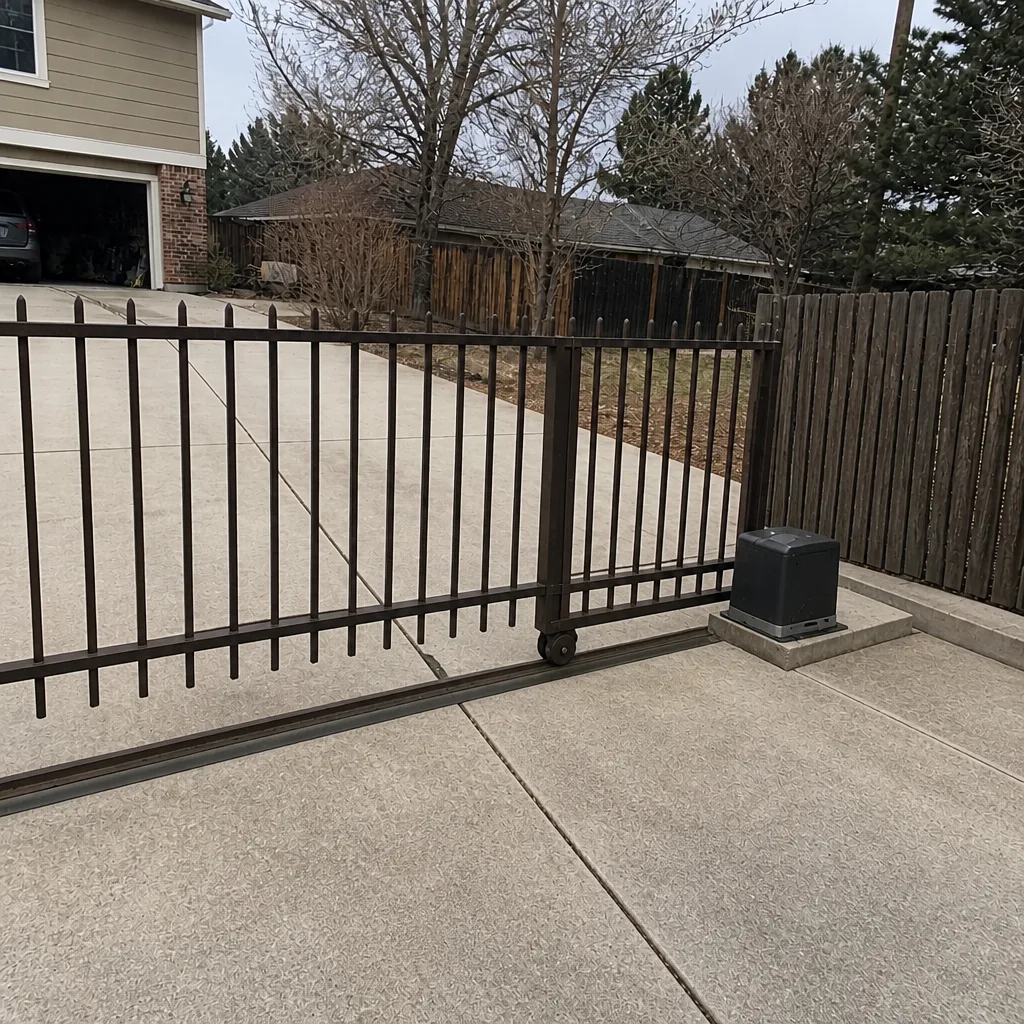 After
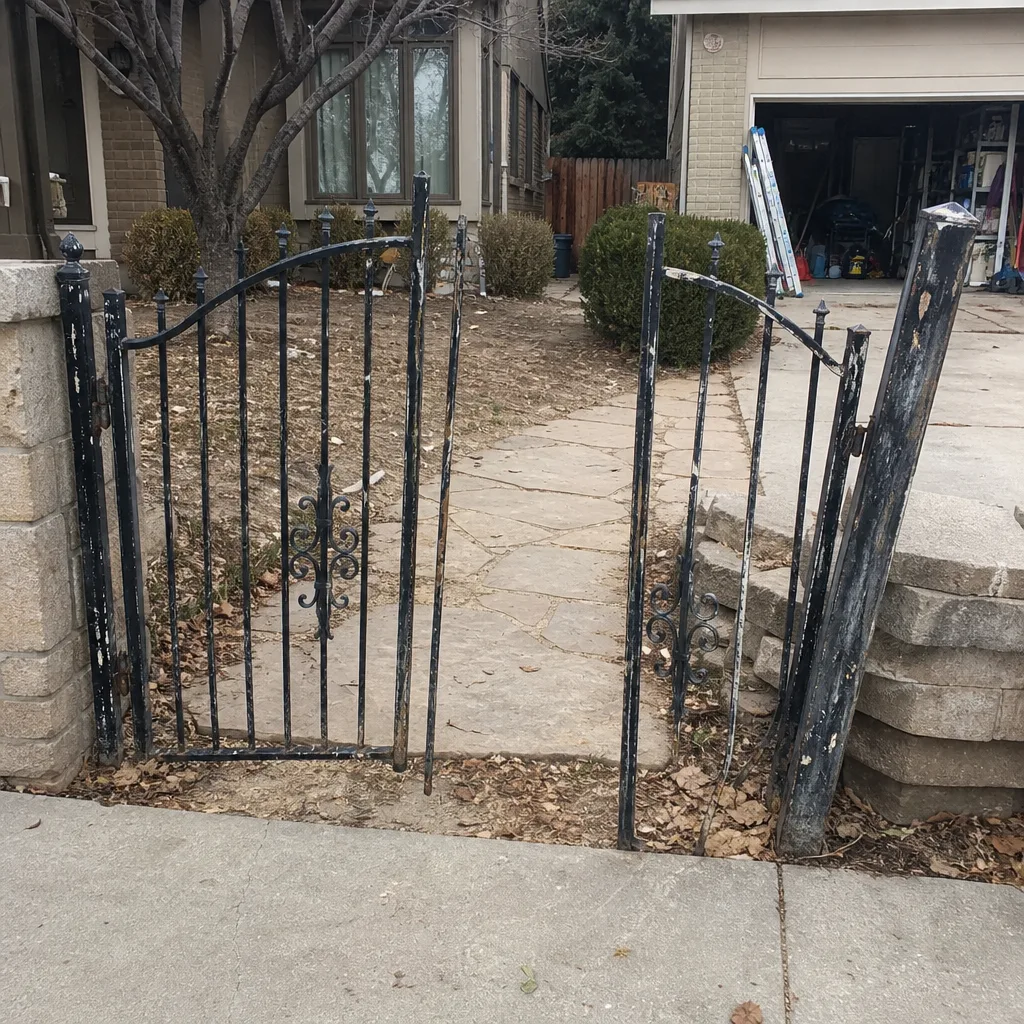 Before
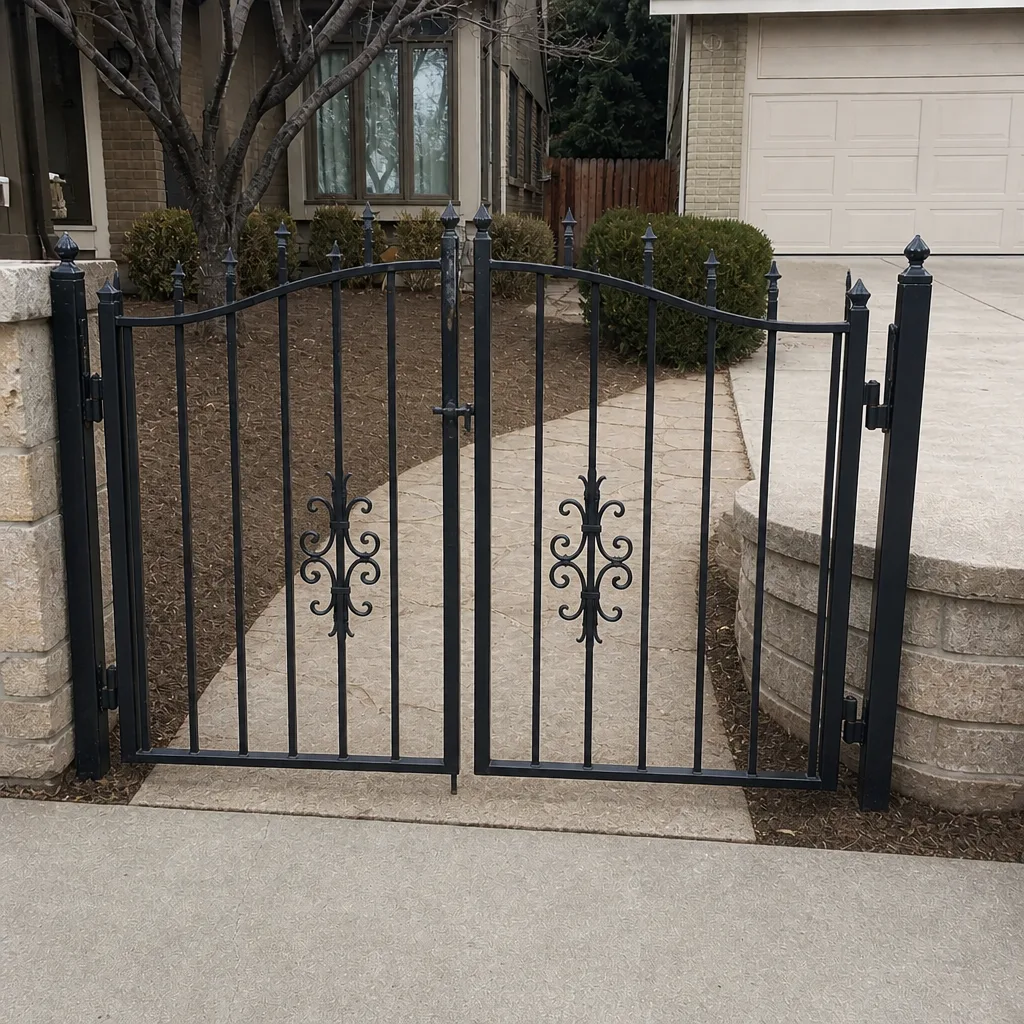 After
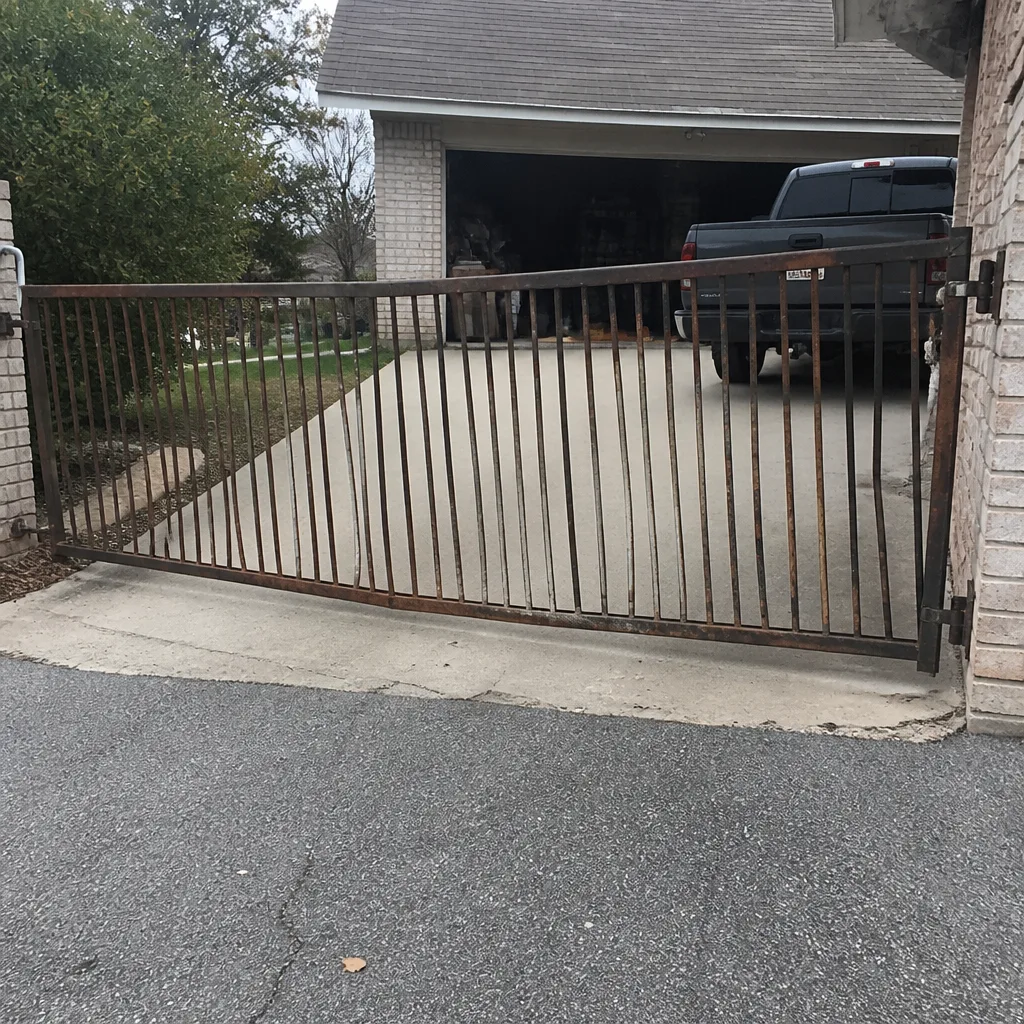 Before
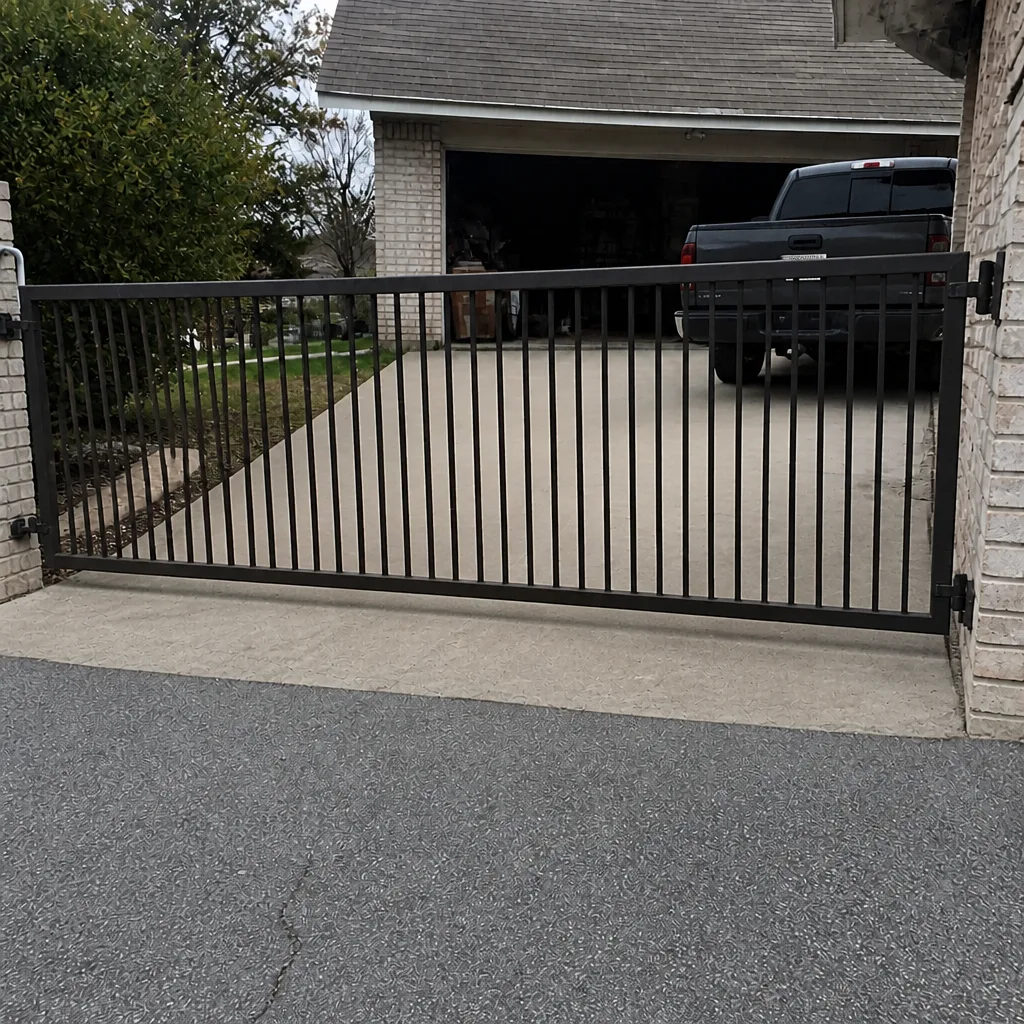 After
When to Call a Professional
Call a specialist when the manual release test shows the gate binding, when the operator blink code points to a control-board fault, when you see weld cracks, when a post is leaning, or when the photo-eye keeps going out of alignment after repeated cleaning. Also call if you’re not sure what the gate’s symptom means – the wrong part swap costs more than the diagnosis. On the electrical side, anything involving the operator’s internal wiring, the power run from the house, or the motor capacitor is technician territory. Gates are heavy, and any diagnosis that involves running the gate while you’re near the hinge is a risk you shouldn’t take alone. Stratford Gate Repair offers free estimates in Highlands Ranch – call (866) 509-8380.
Frequently Asked Questions
A gate that reverses before closing is almost always detecting an obstruction through the photo-eye beam or the safety edge. Clean both photo-eye lenses, check for debris or a shifted bracket, and look along the gate’s travel for anything the safety edge may be sensing. If it keeps happening after that, the beam needs realigning or the safety edge needs testing.
Sometimes, yes. Check the breaker, replace the remote battery, re-pair the remote to the operator, and look for a blink code on the control board. Those are safe control-side checks. If none of that works, or if the manual release test shows the gate binding, that’s a job for a technician. Call (866) 509-8380 for a free estimate.
Gate repair in Highlands Ranch is priced per job using a written estimate after we look at the gate. We don’t quote a flat rate over the phone, because the right repair depends on whether the fault is in the operator, the safety system, the hardware, or the footing. The price we quote in writing before any work starts is the price you pay. Estimates are free – call (866) 509-8380.
We work on the brand you already have. Our technicians are experienced with LiftMaster, FAAC, BFT, Linear, Viking, Ghost Controls, DoorKing, Elite, and Mighty Mule systems, from residential Mighty Mule and Ghost Controls operators to commercial-grade DoorKing and FAAC systems at HOA entrances and apartment complexes.
Use the manual release test. Disengage the operator per your owner’s manual and push the gate through its full travel by hand. If it moves freely, the problem is electrical – the operator, control board, safety system, or power. If it binds, rubs, or drags, the problem is mechanical – a hinge, a wheel, a footing, or a weld. That 30-second test usually tells a technician which half of the system to work on.
For gate repairs, we offer same-day service when the schedule allows. Call (866) 509-8380. We answer 24/7. Fast dispatch from 7am to 7pm, Sunday through Friday. A call outside dispatch hours is booked into the next opening, Sunday through Friday, 7am to 7pm.
The Bottom Line
Most gate problems in Highlands Ranch come down to alignment, power, or wear. Read the symptom first, run the manual release test, and check the blink code before you replace anything. Freeze-thaw cycles stress footings, hinge pins, and welds in ways warmer climates don’t, so a sudden drag after a cold snap is a structural signal, not an operator failure. The line between safe DIY resets and technician-only work is clear: photo-eyes, remotes, and batteries are yours to check. Capacitors, control boards, welds, and footings are not. If you’re unsure, that’s the moment to call a specialist. Contact Stratford Gate Repair for gate repair across Highlands Ranch – we’ll diagnose the actual fault before anything gets replaced. Call (866) 509-8380 for a free estimate. We answer 24/7. Fast dispatch from 7am to 7pm, Sunday through Friday.
Written by the team at Stratford Gate Repair.