
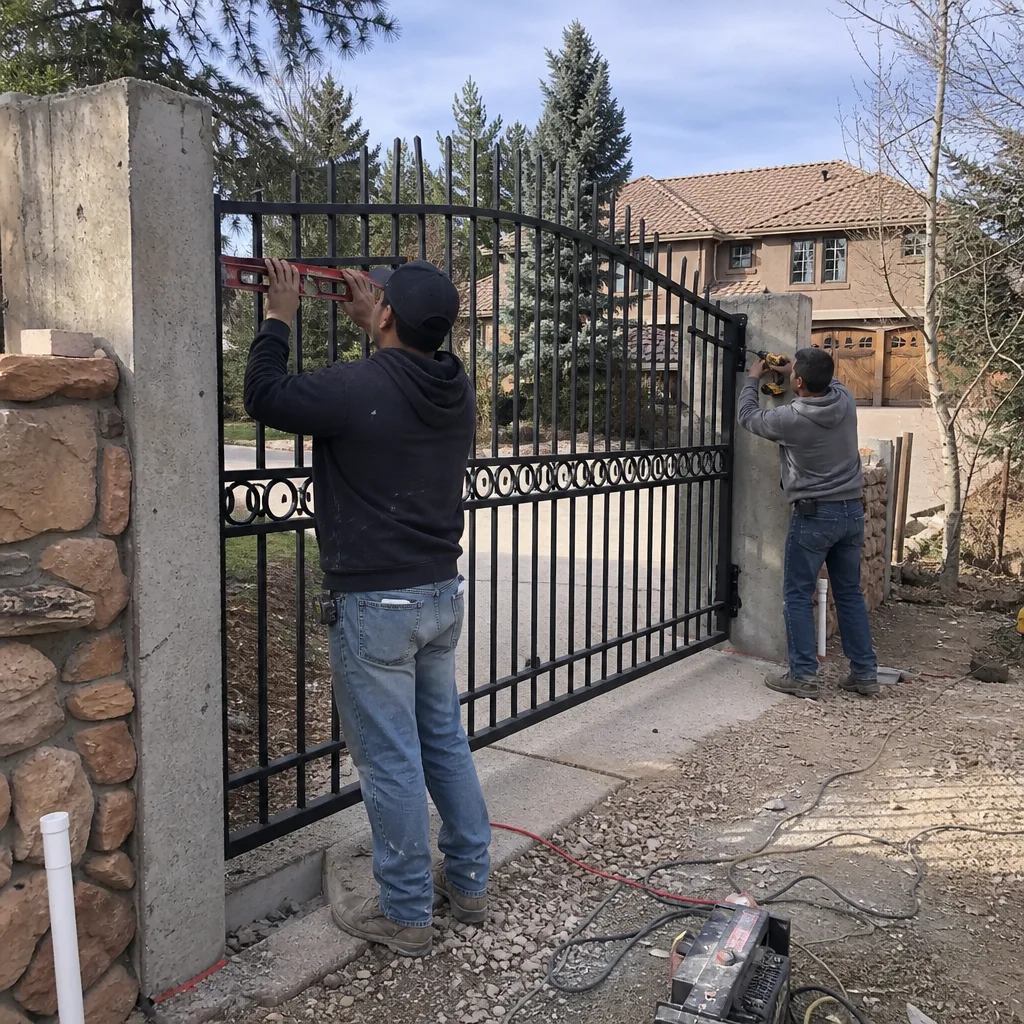
Last updated November 15, 2026
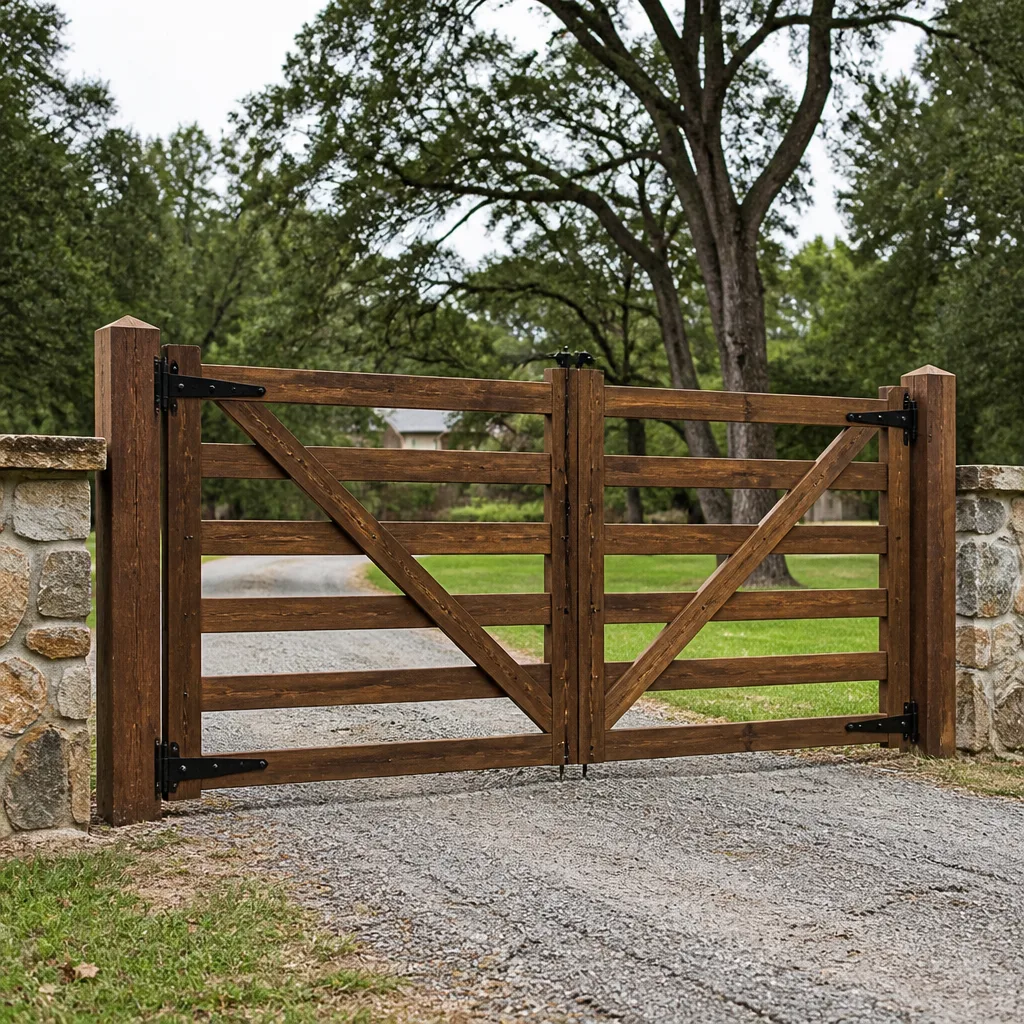 Farm & ranch
 Wrought iron
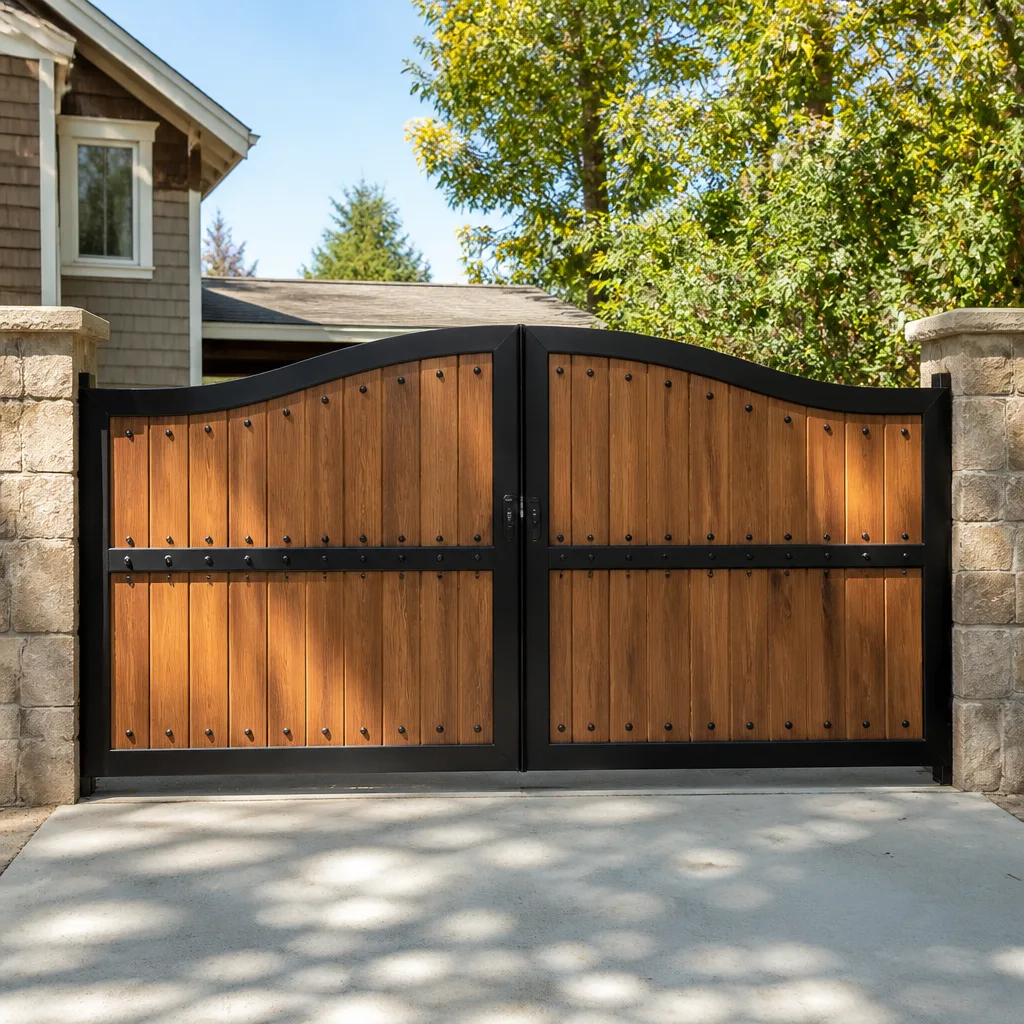 Wood & steel frame
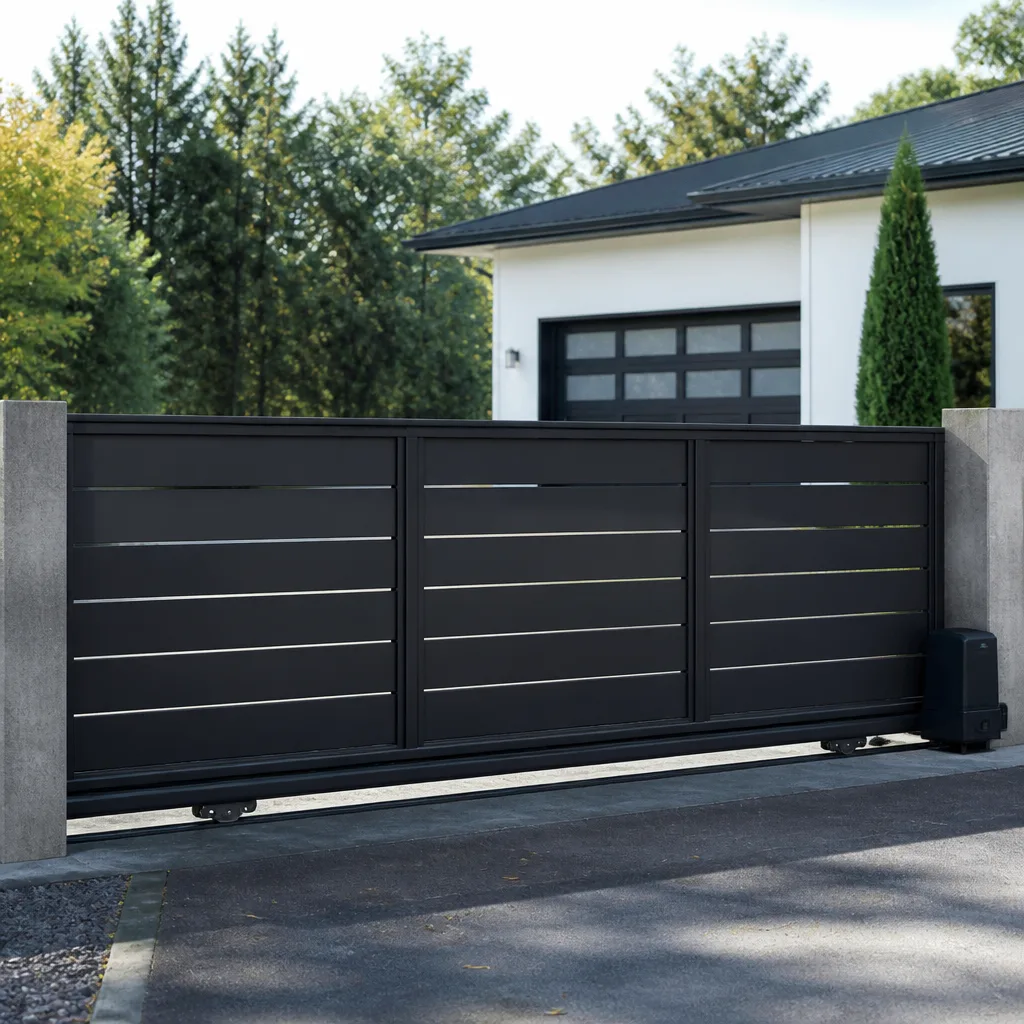 Sliding driveway gates
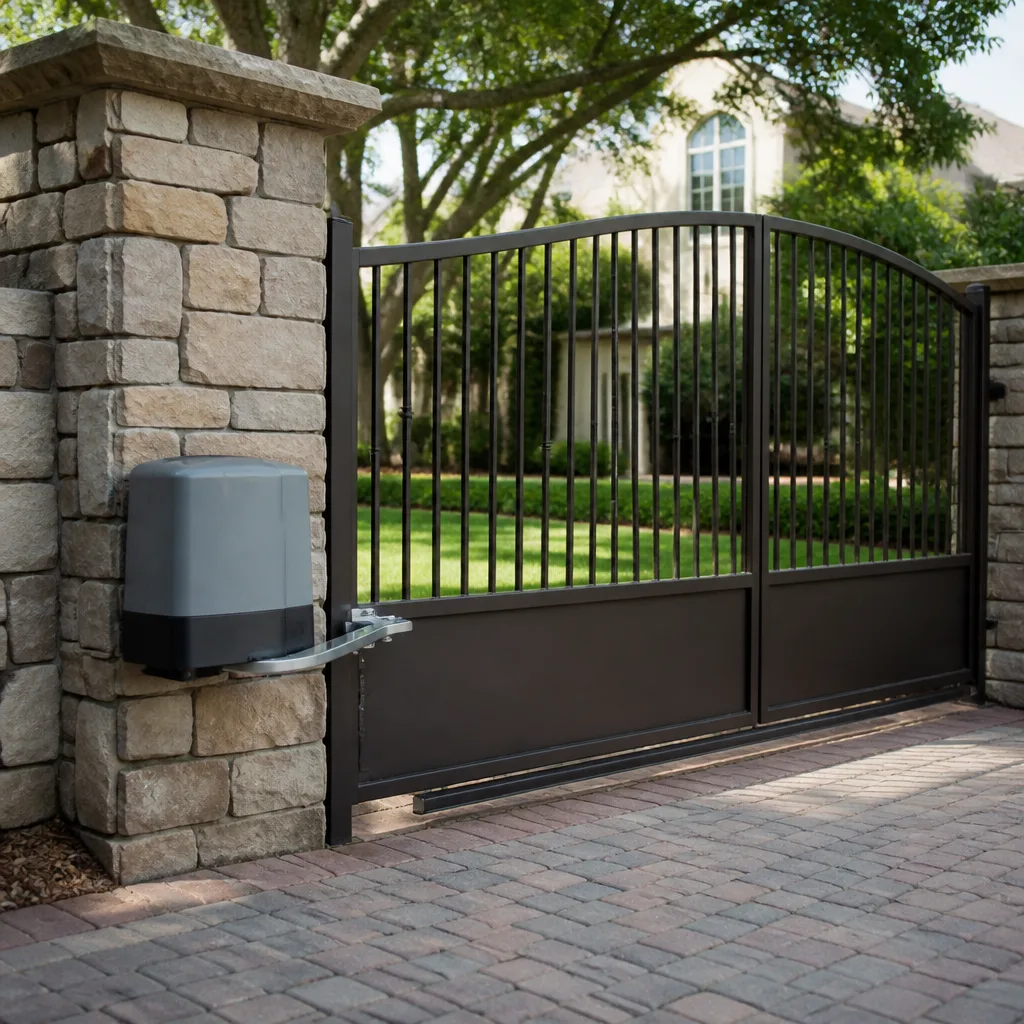 LiftMaster operators
Free on-site gate assessment - hinges, posts, and your LiftMaster or Nice gate operator checked before anything is quoted
The assessment is free and the quote is the invoice.
Get your free estimateGate Repair Permits, Codes & Inspections in Highlands Ranch, CO: What You Need to Know
Most gate repairs in Highlands Ranch need no permit at all. That’s the part everyone gets right. The part they get wrong is assuming every repair falls into that category. Changing a hinge, swapping a remote, adjusting a swollen latch: none of that touches a permit desk. But replace the operator, run new wire, or dig up and reset a gate post, and you’ve crossed into work that Douglas County treats far more seriously than a hardware upgrade. The surprise isn’t the cost of a permit. It’s discovering after the fact that you needed one, that your HOA approval no longer matches what’s installed, or that a buyer’s inspection flagged the whole thing. This guide maps where that line actually sits for Highlands Ranch properties.
Quick Answer
Gate repairs in Highlands Ranch generally do not require a county permit when you’re replacing parts, repairing hardware, or swapping an operator on an existing circuit. Permits typically come into play when the work involves structural changes to the gate, new or altered electrical connections, or full post replacement. Highlands Ranch also layers HRCA design review on top of county code for any visible change. The rule of thumb: mechanical repair, no permit. Structural or electrical change, ask the county and get HRCA approval first.
Styles & brands we work with
- Wrought iron
- Wood & steel frame
- Farm & ranch
- Sliding driveway gates
- LiftMaster operators
Table of Contents
- What Triggers a Permit in Douglas County?
- How the HRCA Design Guidelines Layer On Top
- Does “Like-for-Like” Actually Exempt You?
- The Inspection Process for Hardwired Gate Operators
- Post Replacement: The Most Misunderstood Trigger
- How Unpermitted Gate Work Surfaces During a Home Sale
- What Makes Highlands Ranch Different
- A Pre-Work Checklist for Highlands Ranch Gate Projects
What Triggers a Permit in Douglas County?
Three categories of gate work are the usual suspects for a Douglas County permit: structural modifications, electrical connections, and post replacement. Everything else usually falls on the repair side of the line.
Here’s how the split tends to look in practice:
- Mechanical repair (usually no permit): replacing rollers, hinges, latches, stops, chains, and worn hardware. Swapping a control board or receiver inside an existing operator enclosure. Adjusting limit switches and travel. Replacing a photo-eye or safety edge on the same wiring run.
- Structural modification (typically permit territory): changing gate width, height, or swing direction. Welding a new frame. Cutting a gate panel to fit a different opening. Reinforcing a post with concrete or anchoring hardware into masonry where there wasn’t a mount before.
- Electrical work (permit in most cases): running a new dedicated circuit to the operator, adding a disconnect, replacing conduit and conductors, or adding low-voltage wiring that changes how the system is powered. A permit is also typically needed to replace an operator with a different voltage or amperage draw than what’s there.
- Post replacement (permit depends on scope): resetting a leaning post in the same footing is usually a repair. Digging a new hole, pouring new concrete, or replacing a post in a different location almost always trips a permit requirement.
Highlands Ranch is unincorporated Douglas County, so county code governs rather than a separate city building department. When in doubt, ask the county directly before work starts. The permit office can tell you what category your project falls into faster than any contractor can guess.
For any work that does land on the electrical side, our electric gate repair team can walk you through what the county typically wants to see before we touch the operator.
How the HRCA Design Guidelines Layer On Top
The Highlands Ranch Community Association adds its own design review layer on top of Douglas County code. Even work that’s permit-exempt at the county level can require HRCA approval if it changes how the gate looks or where it sits.
This matters more than most homeowners expect. In Highlands Ranch, gate visibility from the street, the style of the hardware, the finish color, the height, and the operator housing all fall under design review. A like-for-like swap that keeps the same appearance usually sails through without difficulty. Anything that changes the silhouette of the entry will get a closer look.
What HRCA review typically covers:
- Gate height and width relative to the property line
- Panel style, spacing, and visual profile
- Finish color and material
- Operator housing design and visibility from the street
- Placement relative to the driveway and landscaping
- Any change that alters the sightline from the road
The sequence matters. Get HRCA approval before you order custom panels or start digging. If your gate is out and you’re waiting on a replacement operator, that’s understandable, but the association’s review timeline is separate from your emergency. A mismatched installation that never got approval will eventually get noticed.
For a broader look at how the association and county interact, see our main Highlands Ranch page.
Does “Like-for-Like” Actually Exempt You?
“Like-for-like” is one of those phrases that sounds like a free pass and doesn’t always behave like one. In practice, it means replacing equipment with something that’s the same type, same size, same power draw, and same location. If you meet all four, the work is usually treated as repair. If any one of them shifts, the exemption usually falls apart.
Here’s where like-for-like holds up and where it doesn’t:
- Holds up: same operator model type, same voltage, same location, same mounting. Same gate panel dimensions, style, and color. Same post location and footing depth.
- Doesn’t hold up: swapping a 12V battery backup operator for a 24V hardwired unit. Upgrading to a heavier operator that needs a larger circuit. Moving the operator housing. Replacing a swing gate with a slide gate. Changing the gate to fit a wider vehicle.
- Grey area: replacing a single swing gate opener with one that has newer safety features and a different power draw. Replacing a post where the new hole ends up slightly deeper than the original.
The grey area is where we see homeowners assume the exemption still applies when it doesn’t. A different amperage draw is a different electrical installation, which usually means a permit, even if nothing else changed. Same goes for a different voltage. The gate looks identical, the switch worked, and yet the electrical scope is genuinely new.
We work on brands across the spectrum, so we’ve seen how like-for-like plays out for both residential operators like Ghost Controls and commercial-grade systems from DoorKing or Elite. The right answer isn’t always “do a permit” or “skip the permit” – it’s usually “find out exactly what changed before we assume.”
The Inspection Process for Hardwired Gate Operators
If a new electrical connection is involved, an inspection likely comes with it. Douglas County inspectors want to see the installation safe and code-compliant before the work is signed off. Gate repair itself is often single-trade, but the electrical portion is the part that gets inspected.
What the inspection typically covers, in the order it usually goes:
- Circuit and disconnect check. The inspector verifies the circuit is dedicated, correctly sized for the operator, and has a labeled disconnect means within reach.
- Conduit and wiring. Conduit runs, burial depth for underground runs, and the condition of the conductors all get checked. Outdoor-rated materials matter here.
- Grounding and bonding. The metal housing and any metal gate components in reach of wiring need to be bonded correctly.
- Safety devices and entrapment protection. This is the one most homeowners don’t anticipate. Operators need functioning safety edges and photo-eyes in place, and the inspector will check that they’re wired and operating.
- Operator labeling and manual release. The operator’s listing label and the manual disconnect need to be present and accessible.
- Signage. Warning signage on the gate, as required by code for the operator type.
We’ve found two things slow down these inspections more than anything else. First, a missing or non-operating photo-eye, which is common after a rough winter. Second, an operator installed by a previous owner that wasn’t wired to code in the first place. Either one can turn a routine inspection into a second visit.
For the electrical portion of any gate project, our gate repair technicians can document what’s there before the inspector arrives, so nothing turns up during the visit that we didn’t already know about.
Post Replacement: The Most Misunderstood Trigger
Post replacement is where homeowners most often assume they’re in repair territory and find out they aren’t. A leaning post in Highlands Ranch soil is common, and the fix often looks like a quick reset. Sometimes it is. Sometimes it isn’t.
Here’s how it usually breaks down:
- Repair territory: straightening a post that has shifted in its existing footing, replacing a post in the exact same hole and depth, tightening anchors that have loosened from seasonal movement.
- Permit territory: digging a new hole, pouring new concrete at a new depth, changing the post location, or replacing a post with a different material or diameter than what was spec’d.
Two things make this tricky in Highlands Ranch. The first is soil. Swelling clay in this part of Douglas County pushes posts out of plumb over years, so post work is more common here than in sandy areas. The second is that a post reset can push against the HRCA design line if the post position shifts visibly or the replacement gate needs new hardware anchoring.
Before assuming it’s a small fix, get a look at what’s actually underground. A post that’s been reset three times is telling you the footing wasn’t right to begin with, and the correct repair isn’t necessarily the fastest one.
How Unpermitted Gate Work Surfaces During a Home Sale
Unpermitted gate work has a way of sitting quietly for years and then showing up on a home sale at the worst possible moment. It almost never surfaces during the years you own the property. It surfaces in buyer inspections, appraisals, and title review.
Where it typically shows up:
- Buyer’s home inspection. A good inspector will flag electrical work at the operator if it looks amateur. Missing disconnects, exposed splices, and unlabeled breakers are the usual giveaways.
- Appraisal. If the gate is an access feature that the listing markets as a selling point, the appraiser will look at whether it’s permitted and functioning.
- Title and permit search. Some buyers request a permit history as part of due diligence. Unpermitted electrical work on the operator will show up as a gap.
- HRCA records. If the gate was installed or modified without design review, the association’s files won’t match the installed product. That mismatch gets discovered during the handoff.
Remediation after the fact is a real process, not a quick fix. It usually means pulling a permit for work that’s already done, having the electrical portion inspected as-is, and in some cases opening up the installation to bring it to code before the inspector will sign off. It also can mean retroactive HRCA approval, which is slower and less forgiving than approval before the work.
The cost of getting this right before the work is measured in the permit fee. The cost of getting it wrong is measured in contingency negotiations at the worst possible time.
What Makes Highlands Ranch Different
Highlands Ranch has a few characteristics that shape how gate permitting and approval actually play out here, compared to neighboring parts of Douglas County.
- Unincorporated county status. Highlands Ranch isn’t a city with its own building department, so Douglas County handles permits and inspections. That’s one fewer desk to visit, but it means the county’s timelines set the pace.
- Active HOA design review. The HRCA’s review layer is more visible and more consistently applied in Highlands Ranch than in many Douglas County communities. The association isn’t a formality – it’s an approval that runs alongside the county’s.
- Swelling clay soil. Post movement is more common here than in sandier areas. That means more post work, more electrical corrections after post replacement, and more opportunities for a repair to cross into permit territory.
- Cold snaps and freeze cycles. Repeated freeze-thaw drives the seasonal movement that loosens hinges, distorts panels, and shifts posts. That’s fine for repair, but the same movement can also expose wiring at the operator over time, which is where electrical scope creeps in.
- Older installations from previous owners. Some gate systems in Highlands Ranch were installed before current code requirements were standard. What used to be fine now has gaps – no disconnect, no signage, no functioning photo-eye. Any new work will bring those to the inspector’s attention.
Those factors combine to make Highlands Ranch a market where a specialist’s read on what’s permit-worthy is worth asking for. See how Stratford Gate Repair handles gate work that touches both the HRCA line and the county line.
A Pre-Work Checklist for Highlands Ranch Gate Projects
Before you order parts, schedule a technician, or assume a repair is exempt, run this checklist. It covers the questions that most often turn “simple repair” into “permit problem.”
- Is this purely mechanical? If yes – hinges, rollers, latch, chain, limit switches – you’re likely in the no-permit category. Move to step 6.
- Is any wiring changing? New circuit, higher draw, different voltage, or new conduit? A permit is likely required for the electrical portion. Note what’s changing and get a written scope before you schedule.
- Is any post being moved or re-poured? If yes, this is likely permit territory unless the footing is identical to the original. Confirm depth and location with the county.
- Is the gate’s appearance changing? Width, height, color, panel style, or operator placement all trigger HRCA review. Submit for approval before ordering materials.
- Is the installation code-current? Functioning photo-eye, manual release, warning signage, and disconnect all in place? If any are missing, expect them to be addressed in the scope even if they weren’t the original reason for the call.
- Is the brand and model going to change? If yes, check whether the new unit has the same power requirements. A brand swap within the same voltage and amperage usually stays in repair territory. A change in power draw does not.
- Have you documented what’s there now? Photograph the operator, wiring, and post condition before any work starts. If the county or HRCA asks for “before” evidence, you’ll have it.
Steps 1 through 3 are the big ones. If you can answer them cleanly, the rest follows. If any answer is uncertain, that’s the moment to bring in someone who deals with gate permits in Highlands Ranch regularly, before the work starts rather than after.
Common Mistakes to Avoid
- Assuming all gate repairs are permit-free. The mechanical-only assumption is wrong about as often as it’s right. Any electrical or structural change moves the work out of the exemption, even if the gate never moved.
- Skipping HRCA approval because the county didn’t require a permit. The two processes are separate. A permit-free mechanical repair is still subject to design review if the gate looks different at the end.
- Treating a like-for-like swap as automatic. A new operator is only like-for-like if it matches on type, size, power draw, and location. Change one of those and the exemption quietly disappears.
- Ordering custom panels before design approval. Highlands Ranch HOA review timelines are outside a technician’s control. Buying materials before approval means sitting on them or eating the cost if the design gets returned.
- Assuming the old installation is code-current. Operators installed years ago often lack disconnects, photo-eyes, or signage. Any new work brings the whole assembly under scrutiny, so plan for corrections even if they weren’t on the original scope.
- Resetting a post without checking the footing. A post that’s been reset repeatedly is telling you the footing wasn’t right. Digging a new one without confirming the depth and location is where repair turned into permit-required work.
- Waiting until the home sale to sort out documentation. Unpermitted work discovered during a buyer inspection is a negotiation problem. Pulling the record straight on your own timeline is a much easier conversation.
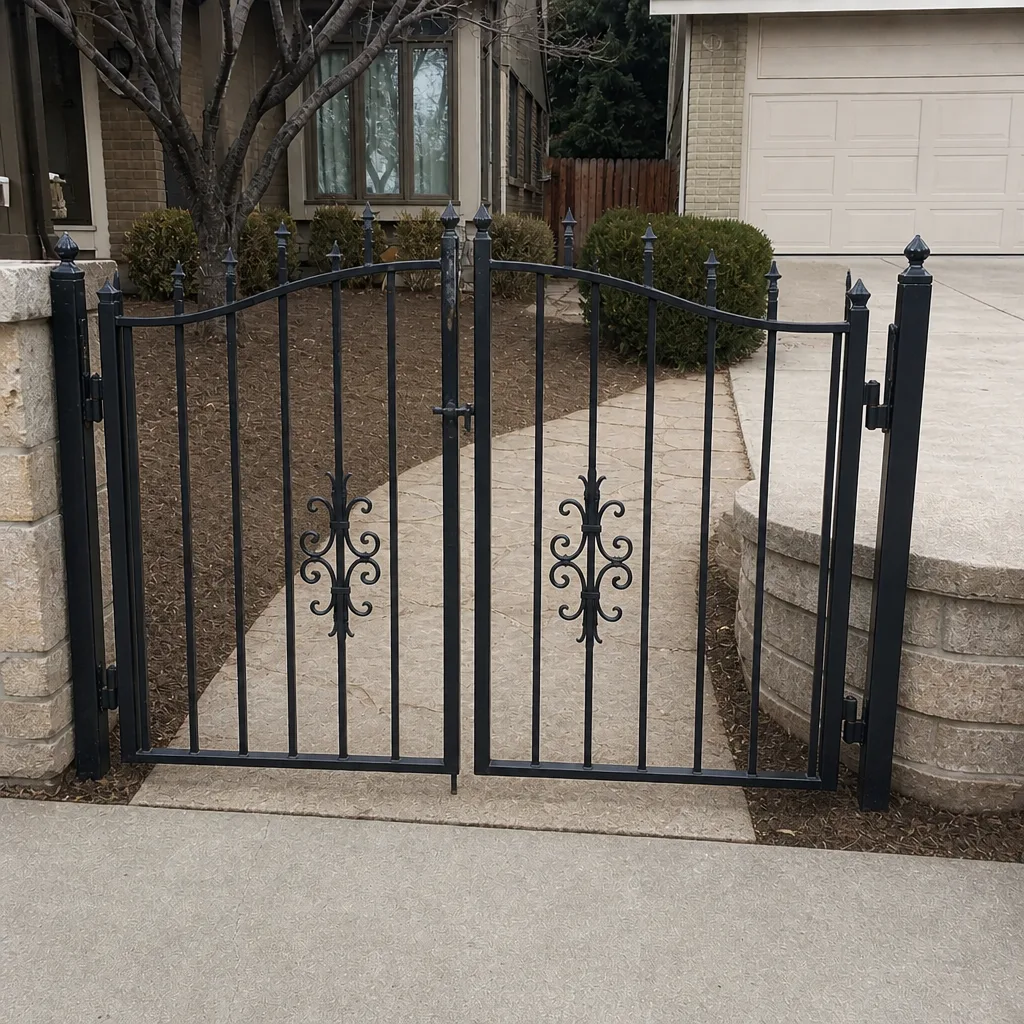
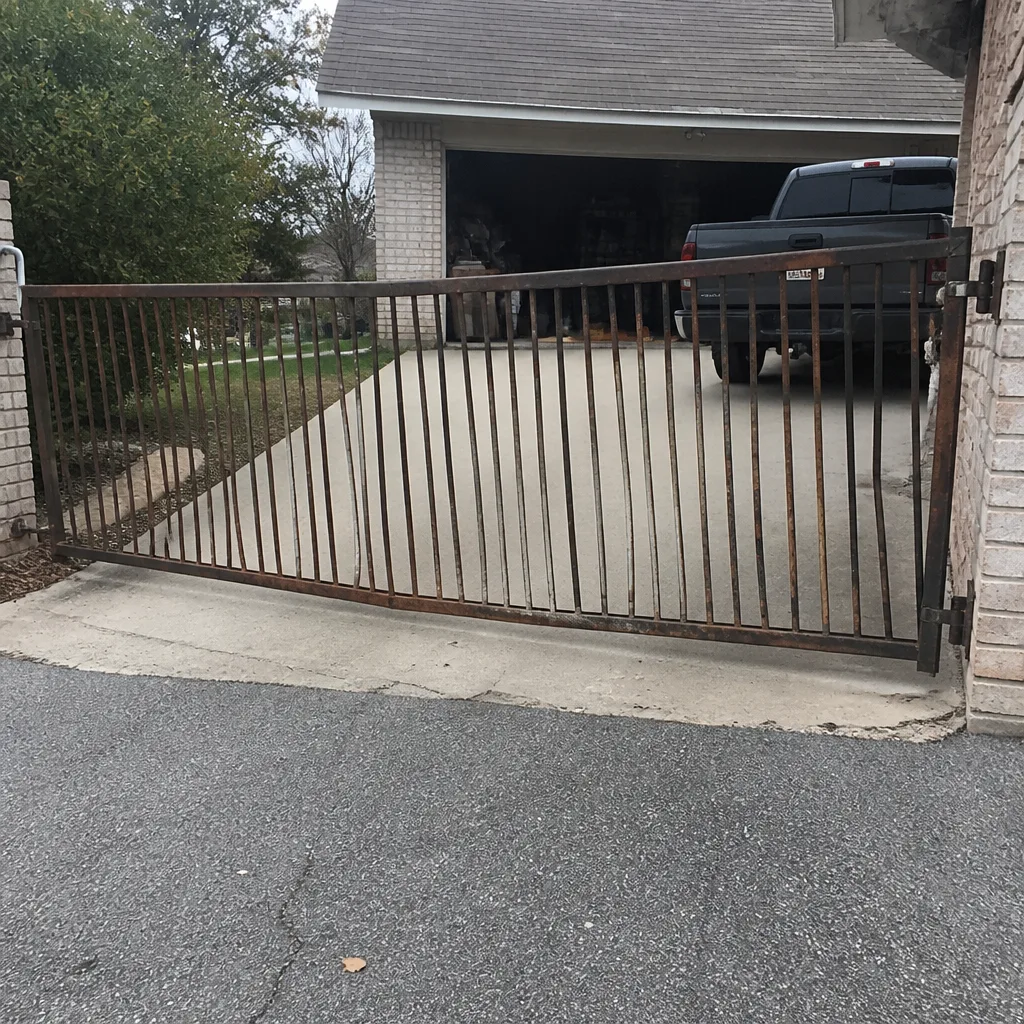
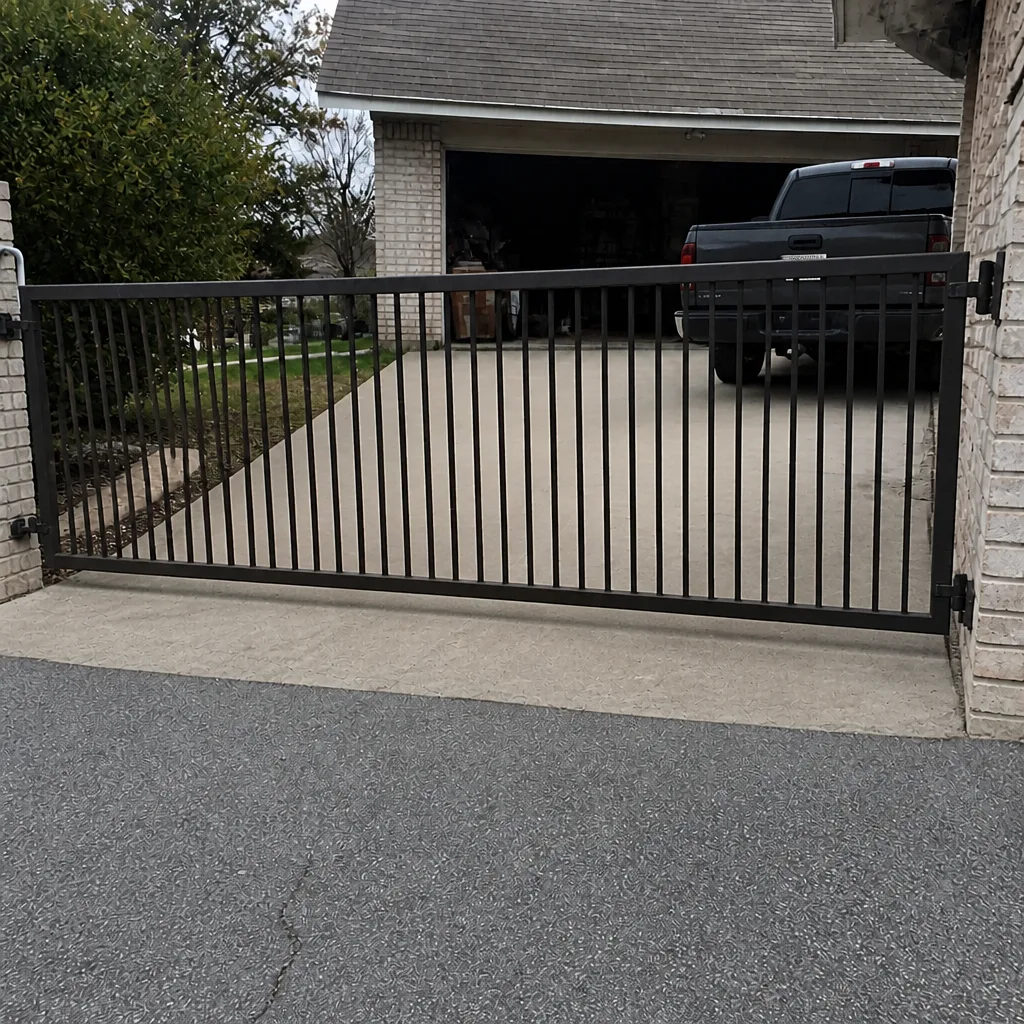
See the difference
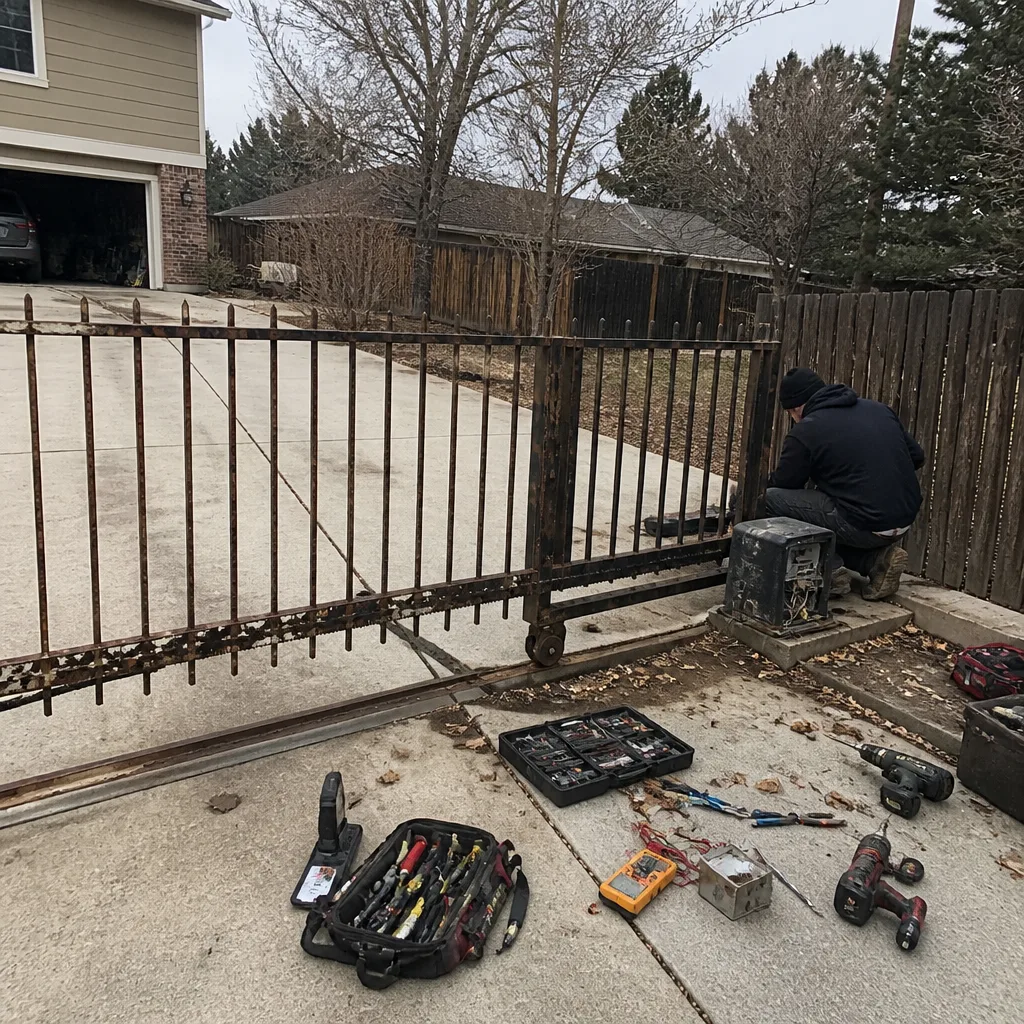 Before
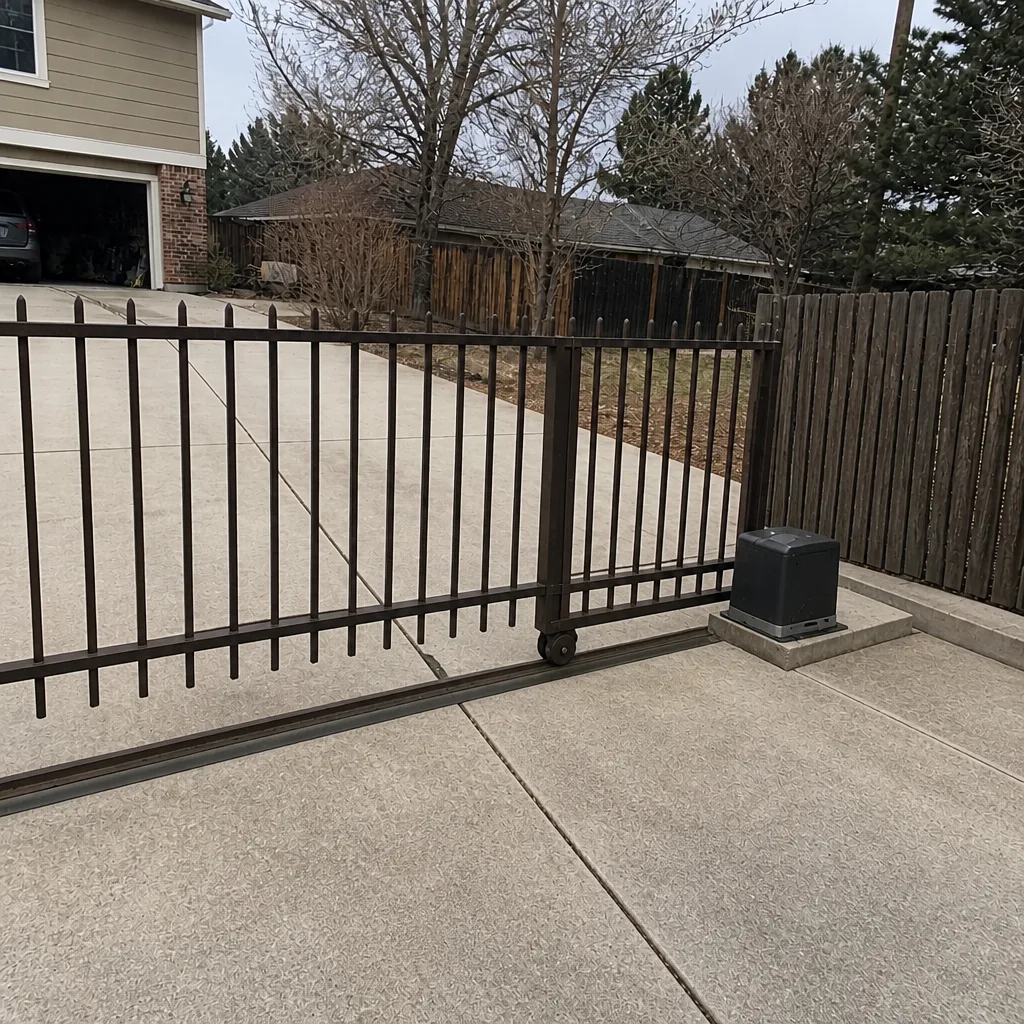 After
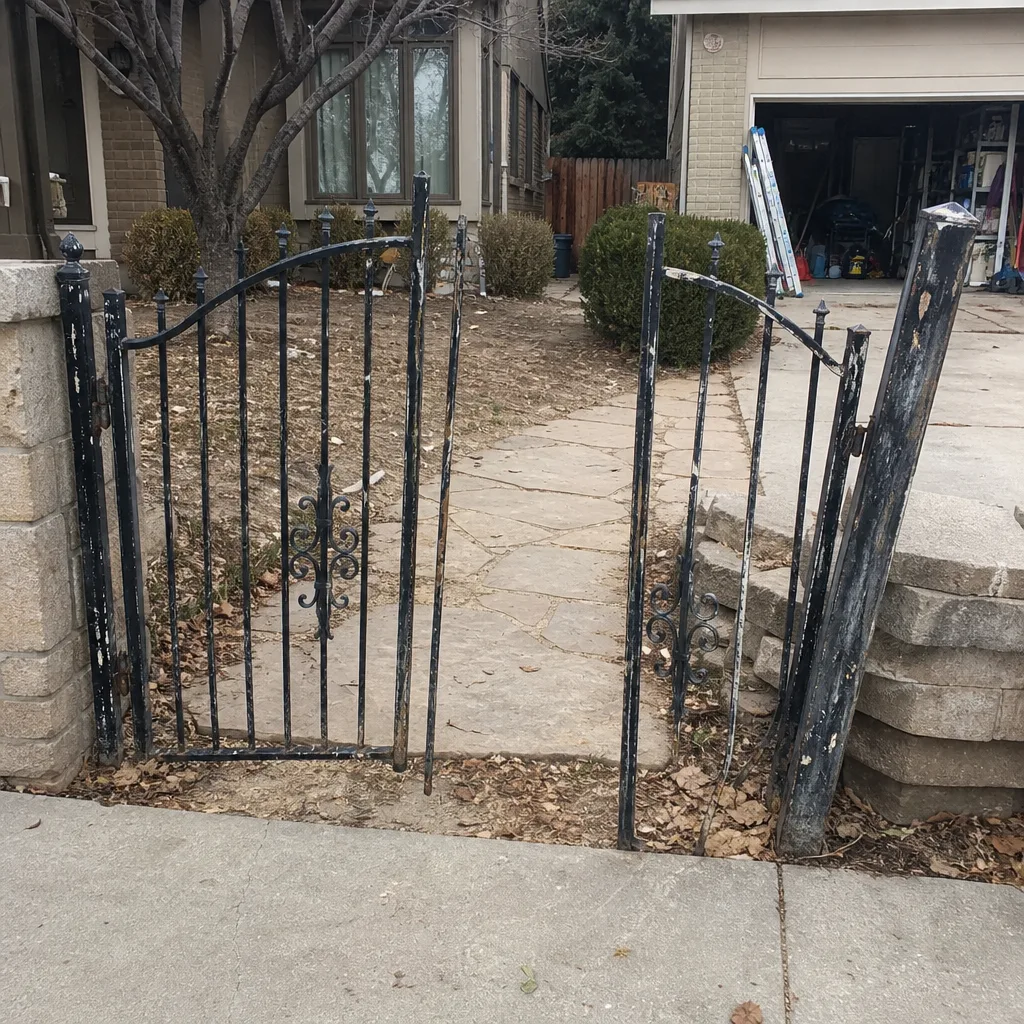 Before
 After
 Before
 After
When to Call a Professional
Call a specialist when the work crosses from repair into any territory that might touch a permit, HRCA review, or an electrical scope. That includes any operator replacement where the power requirements change, any post work that involves a new hole or a new footing depth, any wiring that isn’t a straight replacement on an existing circuit, and any gate where the visible design is going to change. Call one before you start, not after the work is done – a specialist can tell you what’s actually in scope in about the time it takes you to describe the problem.
Stratford Gate Repair offers free estimates in Highlands Ranch – call (866) 509-8380. Our technicians have up to experience with gate systems, including operators from Viking, Ghost Controls, DoorKing, and Elite, and we’ll tell you plainly whether the work is a repair or a permit project before anything starts.
Frequently Asked Questions
Most mechanical gate repairs in Highlands Ranch don’t require a Douglas County permit. Replacing a hinge, latch, roller, chain, photo-eye on an existing wiring run, or swapping a control board inside an existing operator typically falls under repair. A permit generally comes into play when the work touches structural changes, electrical connections, or post replacement with a new footing. If you’re not certain which side of the line you’re on, call (866) 509-8380 for a free estimate – we’ll tell you before we touch anything.
It depends on what changes. Replacing an operator with the same voltage, same amperage draw, same mounting, and same location usually counts as a like-for-like repair and typically doesn’t require a permit. Changing to a different voltage, adding a new circuit, or moving the operator housing usually does. When in doubt, ask Douglas County directly – a permit fee is a much smaller problem than an unpermitted installation discovered later.
Yes, if the gate’s appearance changes in any visible way. The Highlands Ranch Community Association’s design review covers height, width, panel style, finish color, and operator housing visibility. Like-for-like replacements that keep the same look usually pass review without difficulty, but approval still comes before ordering materials. Work that changes the look of the gate without approval can end up needing retroactive review, which is slower.
Like-for-like means the new unit matches the old one on type, size, power draw, and location. Same voltage. Same amperage. Same mounting point. Same housing position. If all four match, the work is usually treated as a repair. If any one changes – a higher draw, a different voltage, a move of the housing – the exemption typically doesn’t hold. A newer model that looks the same on the outside can still be a different electrical installation.
Douglas County inspectors typically check the circuit sizing and disconnect, conduit and burial depth for underground runs, grounding and bonding of metal components, functioning safety edges and photo-eyes, the operator’s listing label and manual release, and required warning signage. Missing or non-operating safety devices are the most common reason an inspection gets pushed to a second visit, especially on older installations.
Unpermitted gate work usually surfaces during the buyer’s home inspection, appraisal, or permit-history search. It can also come up if HRCA records don’t match what’s actually installed on the property. Remediation means pulling a permit for work already done, having the electrical portion inspected as-is, and in some cases retroactive HRCA approval. That’s a slower process than getting the permit before the work, which is why it’s better to sort the record out on your own timeline.
The Bottom Line
Most gate repairs in Highlands Ranch are mechanical, and mechanical repairs are usually permit-free. The exceptions – electrical connections, structural modifications, and post replacement with a new footing – are more common than homeowners expect, and they’re the ones that can void HRCA approval, slow a home sale, or force a retroactive permit. The rule of thumb: mechanical repair without a power or structure change, no permit; anything that touches wiring, gate dimensions, or footing depth, check the county and get HRCA approval first. When you’re not certain which side you’re on, get a specialist’s read before the work starts.
Call (866) 509-8380 for a free estimate on your Highlands Ranch gate. We answer 24/7. Fast dispatch from 7am to 7pm, Sunday through Friday, closed Saturday.
Written by the team at Stratford Gate Repair.